Improving Phosphate Efficiency:
Key to Crop Performance and Water Protection
New ADAS-backed Phosphate Stewardship Guide launched at Cereals Event 2026
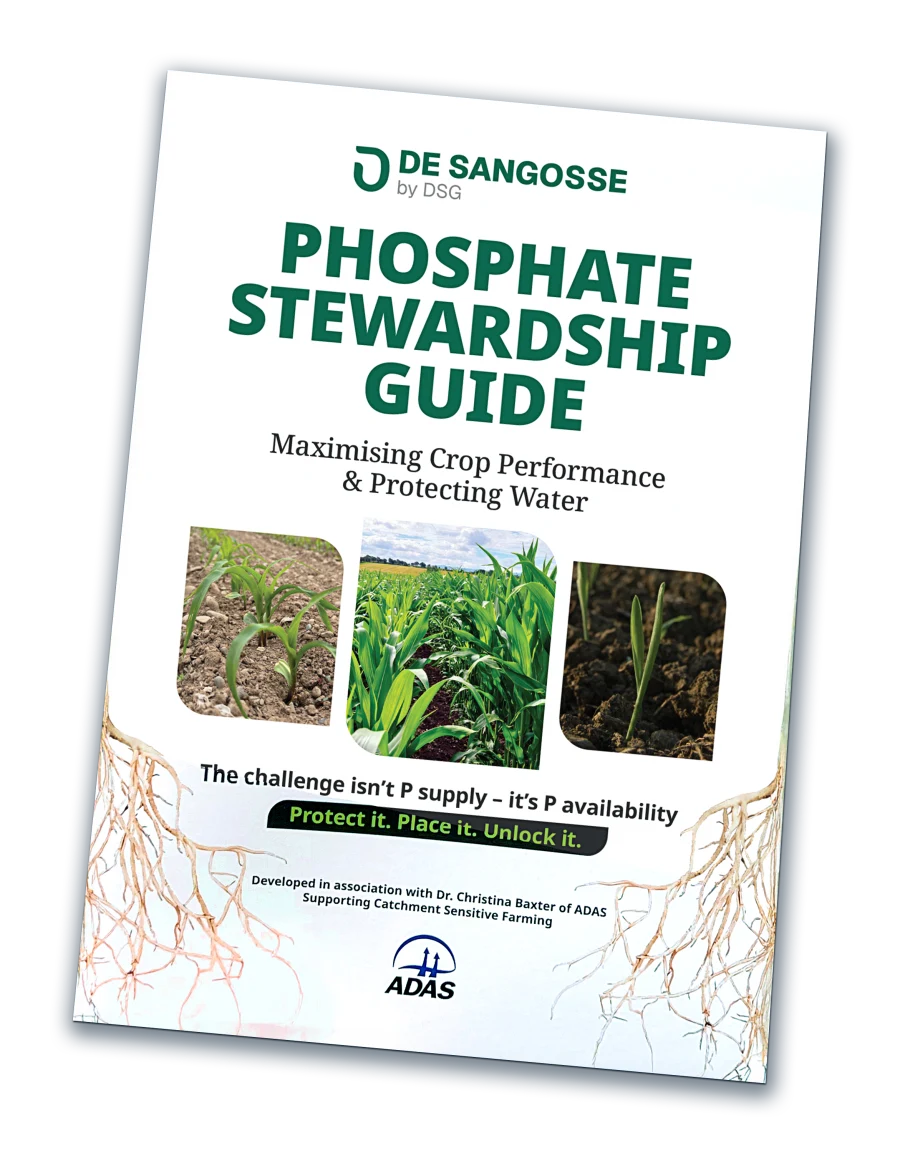
New ADAS-backed Phosphate Stewardship Guide launched at Cereals Event 2026
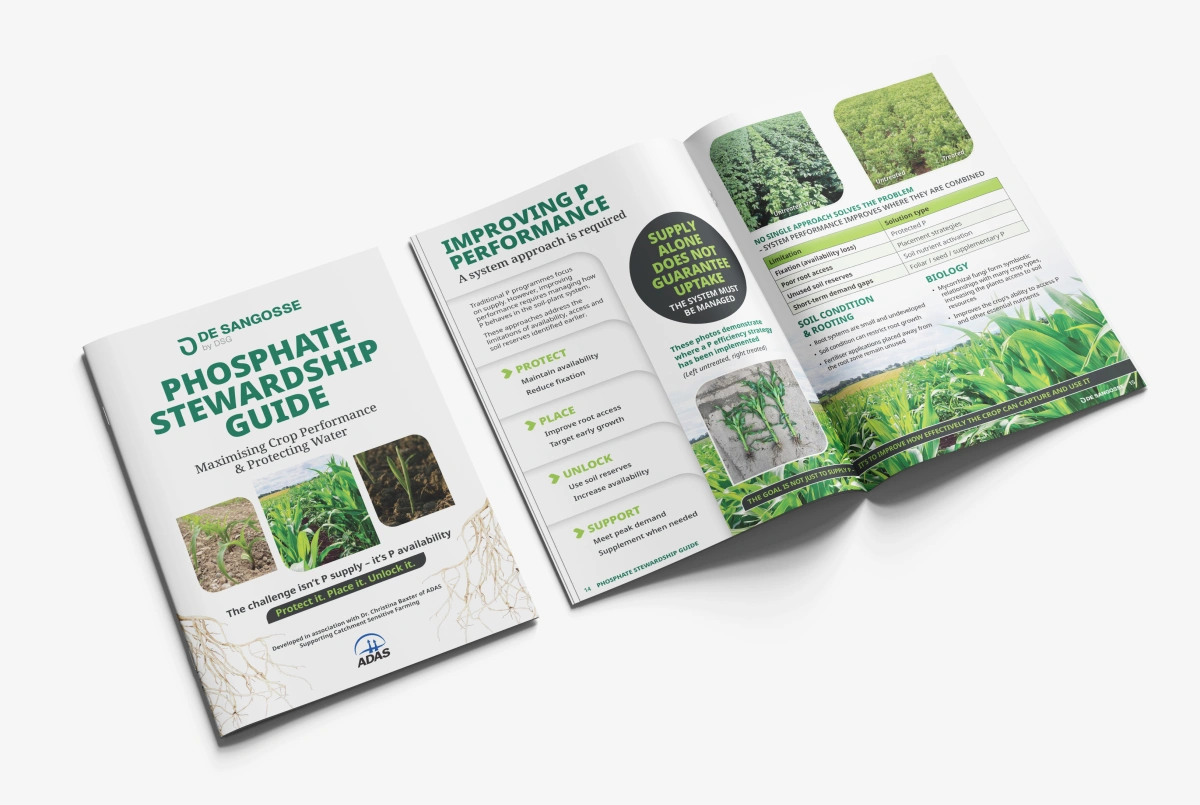
New ADAS-backed Phosphate Stewardship Guide launched at Cereals Event 2026
Improving how crops access phosphorus (P), rather than simply increasing phosphate fertiliser application, is critical to both farm productivity and water quality – which we’ve outlined in a new Phosphate Stewardship Guide launched at this year’s Cereals Event.
Developed in collaboration with ADAS, the guide brings together research, field data and practical agronomy to address one of the most persistent challenges in UK cropping systems: phosphorus availability.
Officially launched at Cereals Event 2026, the guide drew strong interest from growers, agronomists and distributors looking to improve nutrient efficiency.
“Phosphorus availability is a common constraint preventing crops reaching their yield potential,” said Dr Christina Baxter, Senior Research Scientist at ADAS.
Evidence from ADAS’ Yield Enhancement Network (YEN) highlights the scale of the issue:
On average, only 10–20% of applied phosphate is taken up in the year of application, with the remainder becoming fixed in the soil or stored in unavailable forms.
Phosphorus availability is a common constraint preventing crops reaching their yield potential.
– Dr Christina Baxter, Senior Research Scientist at ADAS.
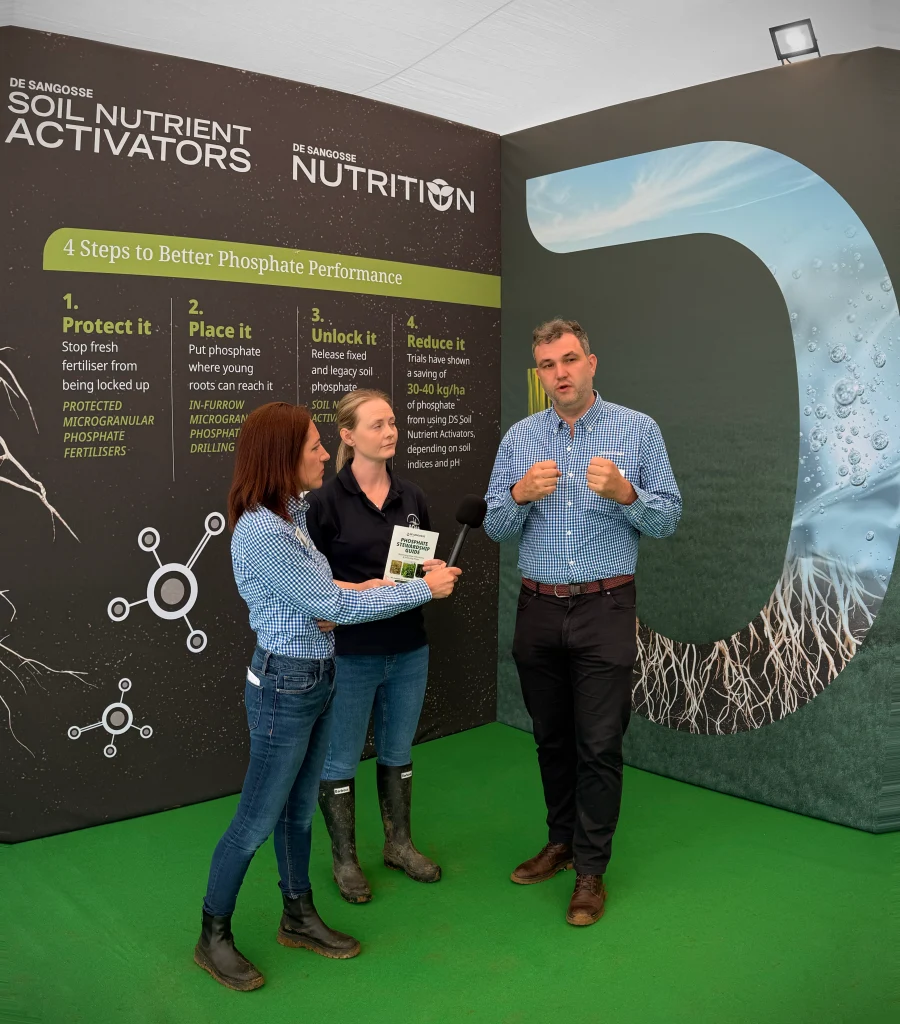
“For a long time, the focus has been on how much P to apply,” said Rob Suckling, Commercial Technical Manager at De Sangosse.
“But increasing supply doesn’t necessarily solve the problem. In many soils, the nutrient is already there - the challenge is making sure the crop can access it.”
Key constraints include:
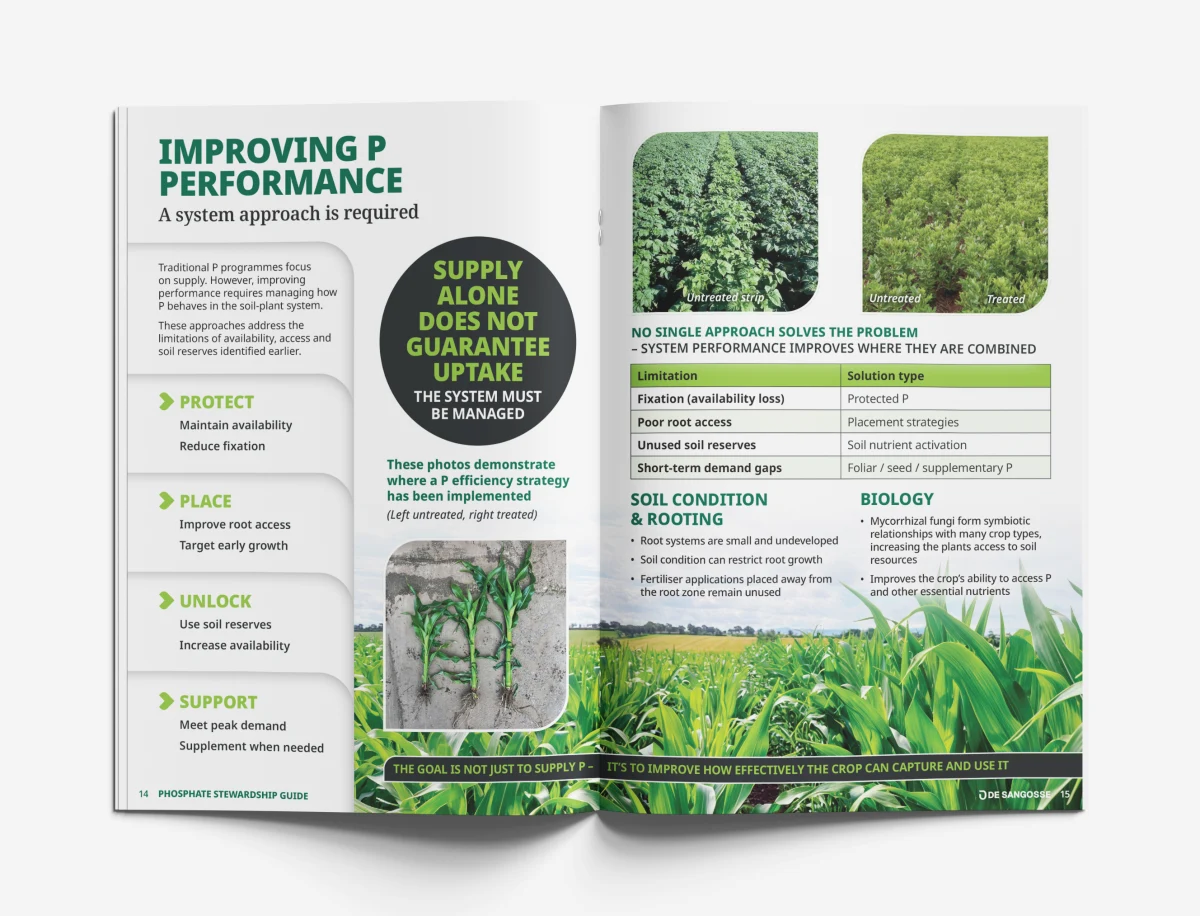
Rather than a single solution, the guide promotes a joined-up, system-based approach to phosphorus management.
This includes:
“What’s becoming increasingly clear is that no single approach solves the problem,” said Mr Suckling.
“When strategies are combined, that’s when you start to see meaningful improvements in efficiency.”
What’s becoming increasingly clear is that no single approach solves the problem, When strategies are combined, that’s when you start to see meaningful improvements in efficiency.
– Rob Suckling, Commercial Technical Manager at De Sangosse
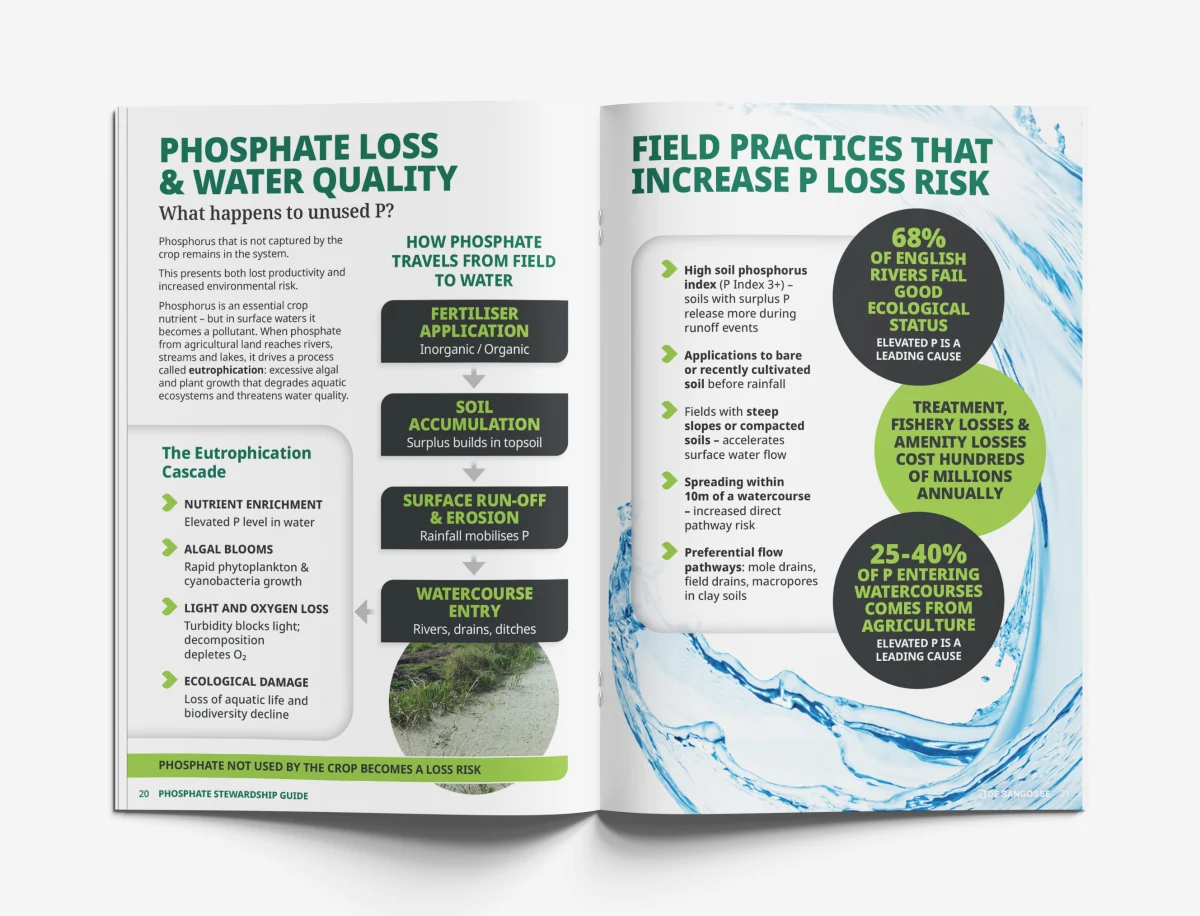
Beyond agronomy, phosphorus management plays a critical role in environmental stewardship.
“Phosphorus is essential for crop growth, but in water it becomes a pollutant,” said Dr Baxter. “Improving how efficiently phosphorus is used on farm is key to addressing that issue.”

The guide also highlights the importance of the wider soil-plant system:
“Phosphorus management isn’t just about fertiliser - it’s about how the whole system functions,” said Mr Suckling.
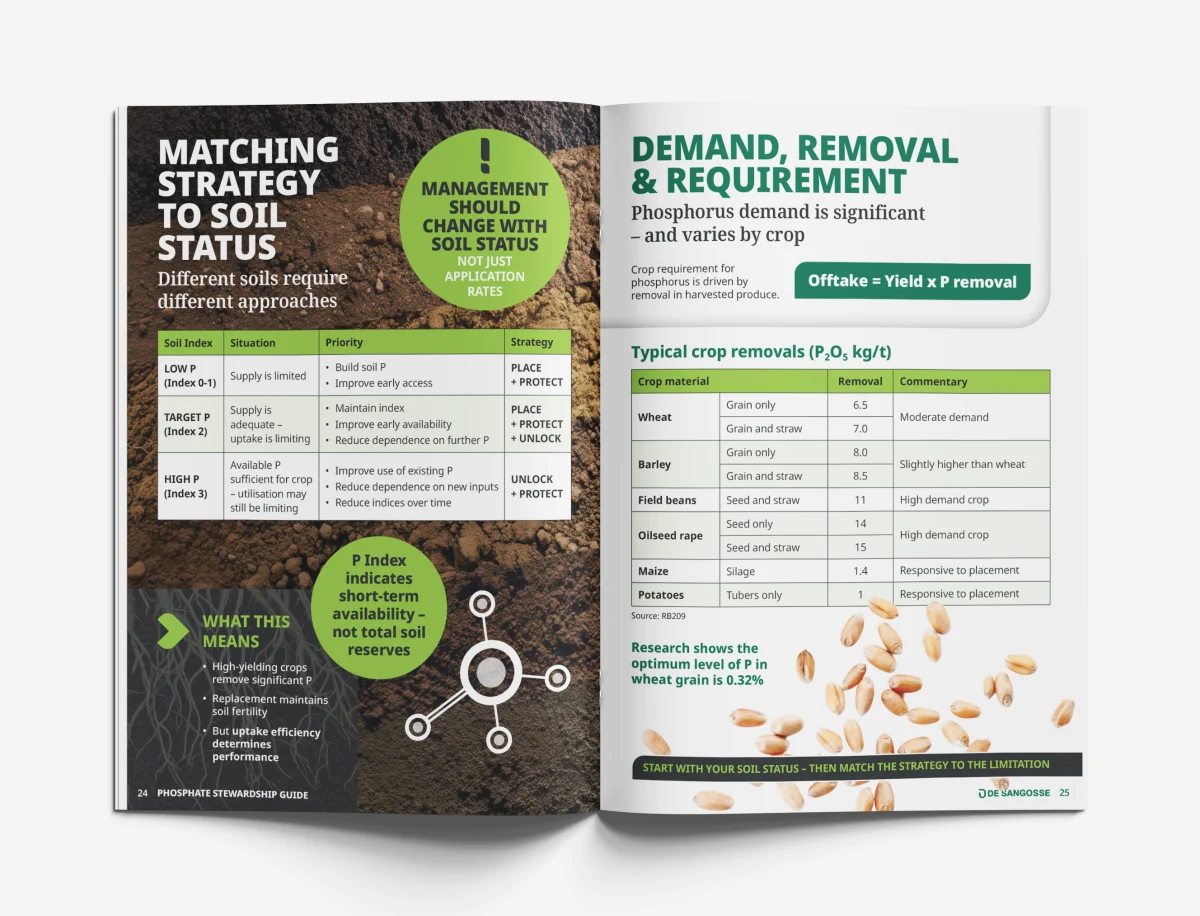
Designed as a practical decision-making tool, the guide helps growers:
“This is about helping growers diagnose what could be limiting uptake in their own situations,” said Dr Baxter.
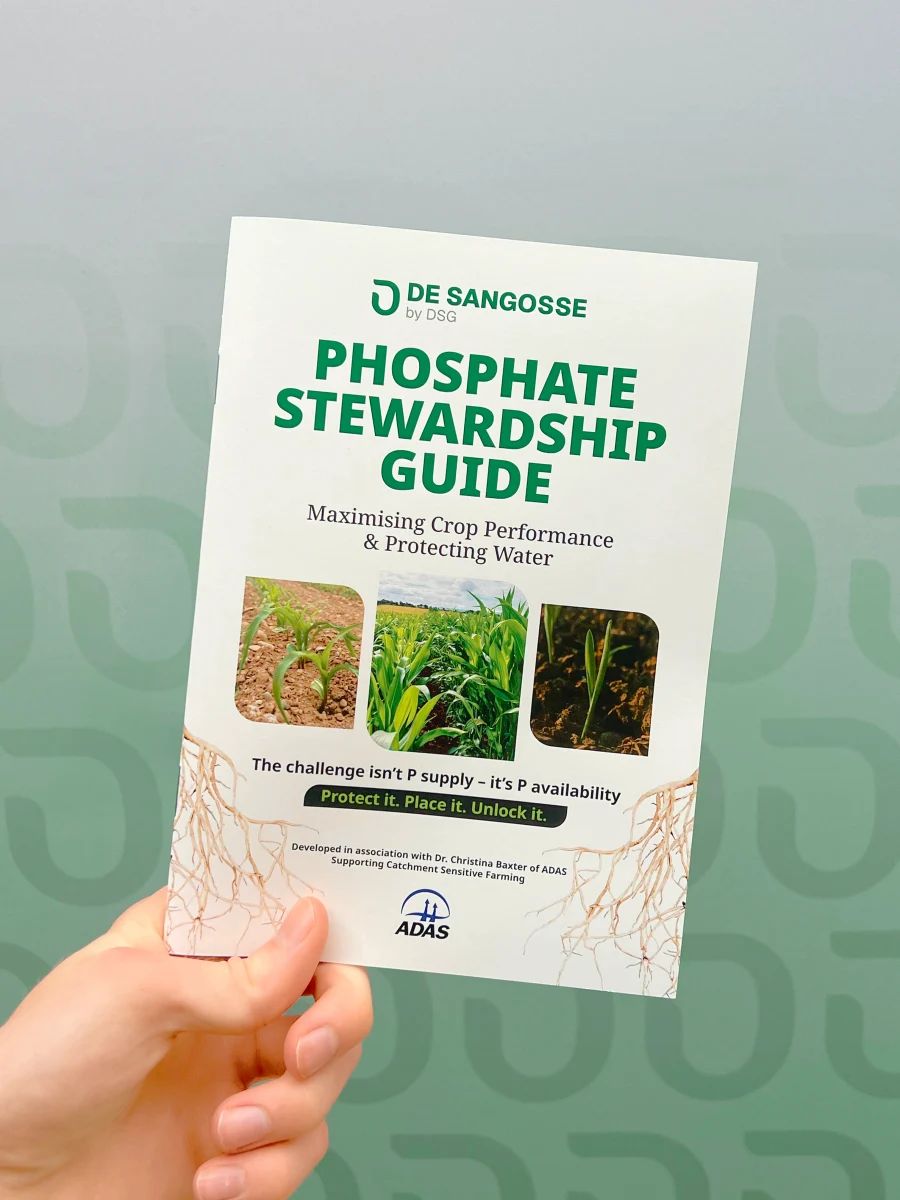
The Phosphate Stewardship Guide is now available for growers, agronomists and distributors.
Download your copy: Phosphate Stewardship Guide
Download the Phosphate Stewardship Guide