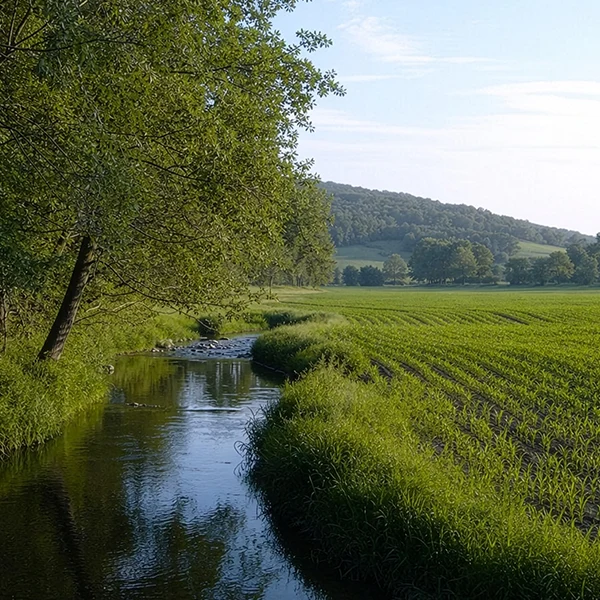
Winter oilseed rape crops across much of the UK have established exceptionally well this season. Early drilling into warm seedbeds, followed by an open, mild autumn, has driven rapid root and leaf development. Many crops are now notably forward moving into November, with a large proportion sitting comfortably at—or beyond—the 8-leaf stage.
An estimated 15–20% of the national area has been drilled alongside companion species, primarily buckwheat but also clovers, fenugreek and niger. As Sarah Hawthorne, Sales and Marketing Manager at DSV notes, “This reflects a sustained move toward more integrated systems that stabilise establishment, support soil health, and mitigate early CSFB pressure.”
Crops that established early and continued growing through the mild autumn are exhibiting high biomass, strong rooting and large, healthy canopies. But this increased leaf area, combined with prolonged periods of warmth and moisture, has also heightened disease pressure.
“Phoma risk is elevated this year, particularly for varieties still leaning heavily on single-gene resistance,” Sarah explains. “We’re seeing early lesions in some forward crops, and with plants still growing vigorously, they remain physiologically susceptible.”
As temperatures begin to fall, maintaining regular monitoring is essential. The speed of phoma development will slow, but the risk has not passed — particularly in fields with susceptible varieties or a history of disease.
Phoma risk is elevated this year, particularly for varieties still leaning heavily on single-gene resistance. We’re seeing early lesions in some forward crops, and with plants still growing vigorously, they remain physiologically susceptible.
– Sarah Hawthorne, Sales and Marketing Manager at DSV
One of the defining features of this season is sustained growth well into late autumn. As crops accumulate biomass, their nutrient demand rises sharply — particularly for those micronutrients that underpin photosynthesis, cell division, root development and stress tolerance.
“This is where we see the difference between maintaining potential and losing it,” says Rob Suckling, Commercial Technical Manager at De Sangosse. “Forward OSR crops are drawing heavily on nutrient reserves right now. If trace elements fall short, even transiently, it has a direct impact on winter resilience and yield potential.”
This is where we see the difference between maintaining potential and losing it. Forward OSR crops are drawing heavily on nutrient reserves right now. If trace elements fall short, even transiently, it has a direct impact on winter resilience and spring regrowth.
– Rob Suckling, Commercial Technical Manager at De Sangosse
Although the peak requirement for zinc occurs earlier in the growth cycle, some high-pH soils or companion-crop systems continue to exhibit restricted availability later into autumn. Where crops lack root depth or have been under stress from CSFB grazing, additional zinc from foliar nutrition like Manzi, may still offer value in supporting ongoing cell division and improving winter hardiness.
Many growers are now applying broadleaf weed (BLW) herbicides — or final grassweed post-ems where label timing still permits — to tidy up canopies before winter. However, the performance of these products is influenced by water chemistry and growers are advised to utilise a true water conditioner in hard water areas.
Hard water remains prevalent across much of the UK, and high levels of calcium, magnesium and other metal ions in the water can lock-up active ingredients in the spray tank before they ever reach the leaf. With forward OSR crops carrying large canopies, achieving clean control of mayweed, cranesbill and other hard to control BLW species requires the herbicide to be working at full strength.
This is where true water conditioners such as X-Change play a critical role.
“Conditioning the spray water ensures the active ingredient remains fully available,” Rob explains. “It prevents lock-up with cations, improves compatibility in complex tank mixes, and helps the herbicide perform consistently — especially in areas where hard water is the norm.”
For OSR growers tackling BLW populations that have escaped earlier passes, getting the water right is one of the simplest ways to protect herbicide efficacy and avoid unnecessary repeat treatments.
As soils cool, attention turns to propyzamide, and growers are urged to ensure the correct conditions for optimal application, advises Rob.
“Soil temperatures should be at 10oC and falling at 30cm soil depth, with adequate moisture to support movement to the root zone. However, care should be taken to avoid heavy rainfall after application, he stresses.”
It is recommended operators download and study the propyzamide Water Protection Advice Sheet (WPAS) from the Voluntary Initiative website here.
Rob points out that this season, the inclusion of a spreading adjuvant like Silwet-L77 could be extremely beneficial to help spray droplets reach the soil – that’s the target not the foliage. “The trouble this year is that many OSR crops are very forward in their development, with large leaves that will intercept spray droplets. An effective spreading adjuvant will help these droplets run off the leaf and hit the soil. With propyzamide we need to get the active to the root zone of weeds in the top 5cm of the soil.
“The additional benefit of including an adjuvant like Silwet-L77 is that it will also enhance lateral distribution of propyzamide to areas shaded by the crop canopy where difficult grass-weeds like black-grass and ryegrass could be lurking,” he adds.
Companion species have continued to gain traction, with buckwheat being the most widely used this season. In many fields, companions are now dying back naturally or being suppressed by cooling temperatures.
Their presence can influence nutrient cycling, microclimate, and early weed suppression — but they may also alter nitrogen dynamics and Zn/Mn availability in the rooting zone. Foliar nutrition helps moderate these shifts and stabilise the growth trajectory of the OSR plant as companions senesce.
With crops now entering the phase where growth will slow before dormancy, the aim is to ensure they cross into winter with:
Rob summarises: “This has been an excellent establishment year for OSR — one of the best we’ve seen in a long time. The challenge now is simply to protect that potential. Managing nutrition intelligently and ensuring late-season herbicides work to their full capability will help forward crops carry their advantage through to spring.”
The 2026 harvest is forecast to show a 30% increase in oilseed rape area compared with last year’s low, alongside a modest rise in wheat area, though regional variation is expected. Sarah says “DSV UK reports strong demand for Clearfield varieties, with growers shifting away from HEAR contracts and returning to double-zero hybrids.
“There is an expansion in the UK’s total area and the European sowing area seems to be stable compared to last year. Globally a strong 2025/2026 production is currently expected,” Sarah continues. “Notably, production in Canada could be a record high due to strong yields. On the continent, pressure from CSFB with inhomegene emergence have been noticed in some regions, but many fields could catch up now ahead of winter. The effect of CSFB on later drilled fields will be visible in Spring and might lead to some yield problems. In Ukraine and South East Europe many fields were drilled into October, which could affect winter hardiness, adding additional risk.”
DSV UK is anticipating the release of the AHDB Recommended List on 1 December, with high expectations for their new variety Dompteur, noted for its top-end yield potential, pod shatter resistance, and strong agronomic package.
Clean Water. Clean Kill. Glyphosate Stewardship.
Practical guidance for better herbicide performance
Visit
Ferric Focus. Smarter Slug Control Starts Here.
Smarter slug control for reliable establishment
Visit
Phosphate Efficiency Pays.
Make every unit of phosphate work harder
Visit