3L of 360g/L Glyphosate, Photo taken 21 DAA
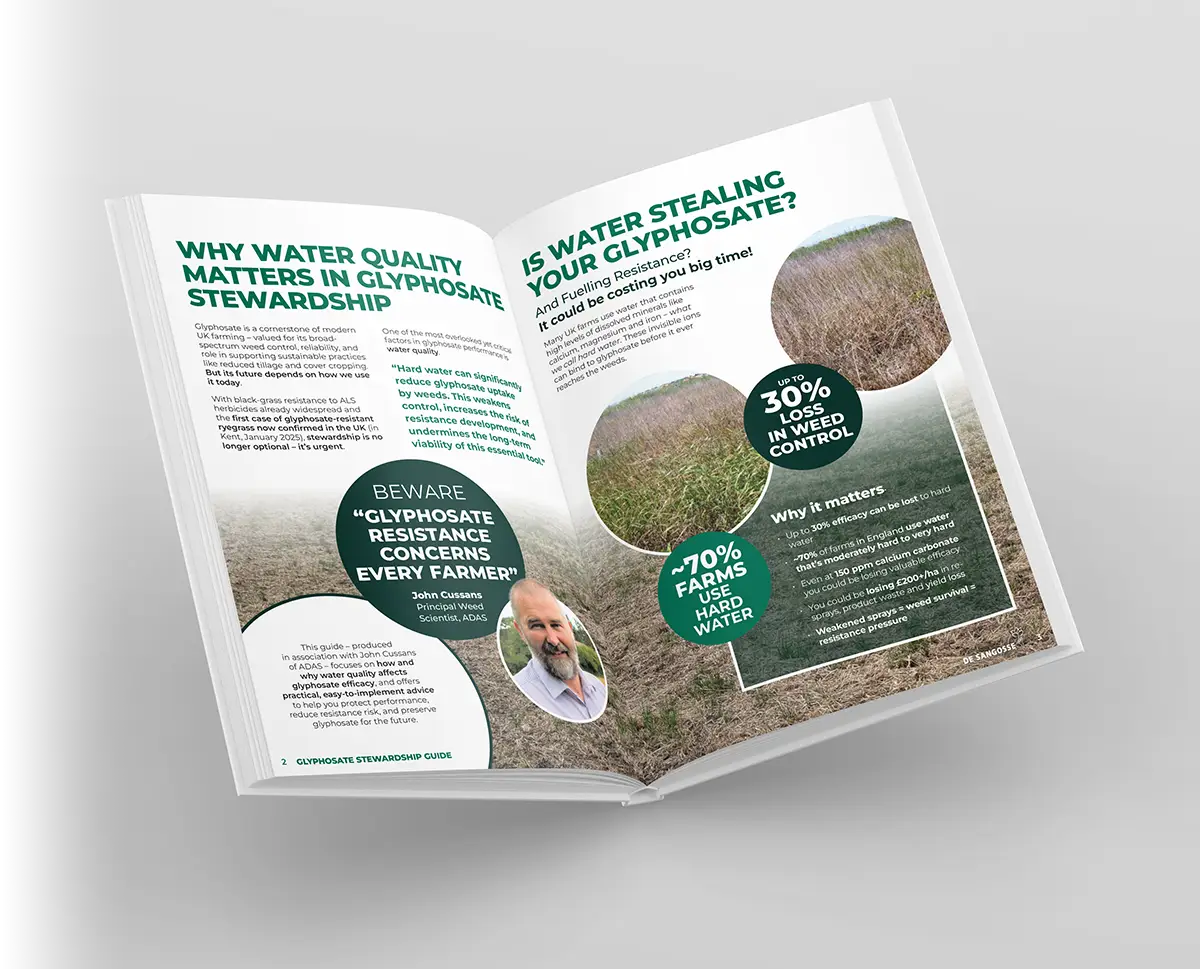
Hard water rarely causes complete failure.
Instead, it causes subtle reductions in uptake:
The spray still works – just not at its full potential.
Over time, these small losses can quietly erode programme performance and reliability. A treatment that delivers slightly less control may still look acceptable in the short-term, but surviving weeds contribute seed return, competition and resistance pressure.
You're right. Testing and addressing water quality issues with susceptible herbicides should be routine. But historically, water conditioning has often been:
Water quality is not a new topic. Better testing tools, clearer guidance, and purpose-designed true water conditioners now make a water-first routine practical and easily achievable. Protecting herbicide performance doesn’t require complexity – just consistency.
Protecting herbicide performance starts before the active ingredients enter the tank. Water quality is one of the easiest factors in spraying to measure, control and restore.
How to test water hardness
Know your water hardness before spraying.
Hardness varies by source, location and season.
Testing removes guesswork and takes seconds with a
digital TDS meter, making routine monitoring practical.
Always add a true water conditioner like X-Change before any products enter the tank.
This prevents hard water cations from interacting with active ingredients. Instead, cations are neutralised by the water conditioner before actives are added.
| Water Hardness (ppm) | Performance Risk | Action |
|---|---|---|
| <100 | Low | Conditioning optional |
| 100-200 | Moderate | Conditioning recommended for glyphosate and other susceptible herbicides |
| >200 | High | Conditioning strongly recommended for glyphosate and other susceptible herbicides |
Condition water consistently and dose according to your water hardness test result, especially when applying:
Always use a true water conditioner such as X‑Change, specifically designed to protect susceptible herbicides from hard water deactivation.
X‑Change works by:
By conditioning water first and dosing correctly, X-Change ensures herbicides remain fully available for uptake – maximising consistency and reliability.
→ Download: X-Change Tech Sheet → Download: 3-Step Water Routine CardRecent seasons have highlighted the importance of optimising glyphosate performance, particularly as resistance pressure increases and confirmed cases of resistant ryegrass reinforce the need to protect efficacy.
But glyphosate is only part of the picture.
Many systemic herbicides are influenced by water quality. Each time uptake is reduced, even slightly, weed control becomes less reliable and pressure on chemistry increases.
A consistent, water-first approach helps:
Small improvements at the start of the spray process protect results all the way to the field.
Download Stewardship GuideTest water. Condition first. Dose based on hardness. Every spray.
After all, water is one of the few fully controllable variables in spray application – making it one of the easiest to improve.