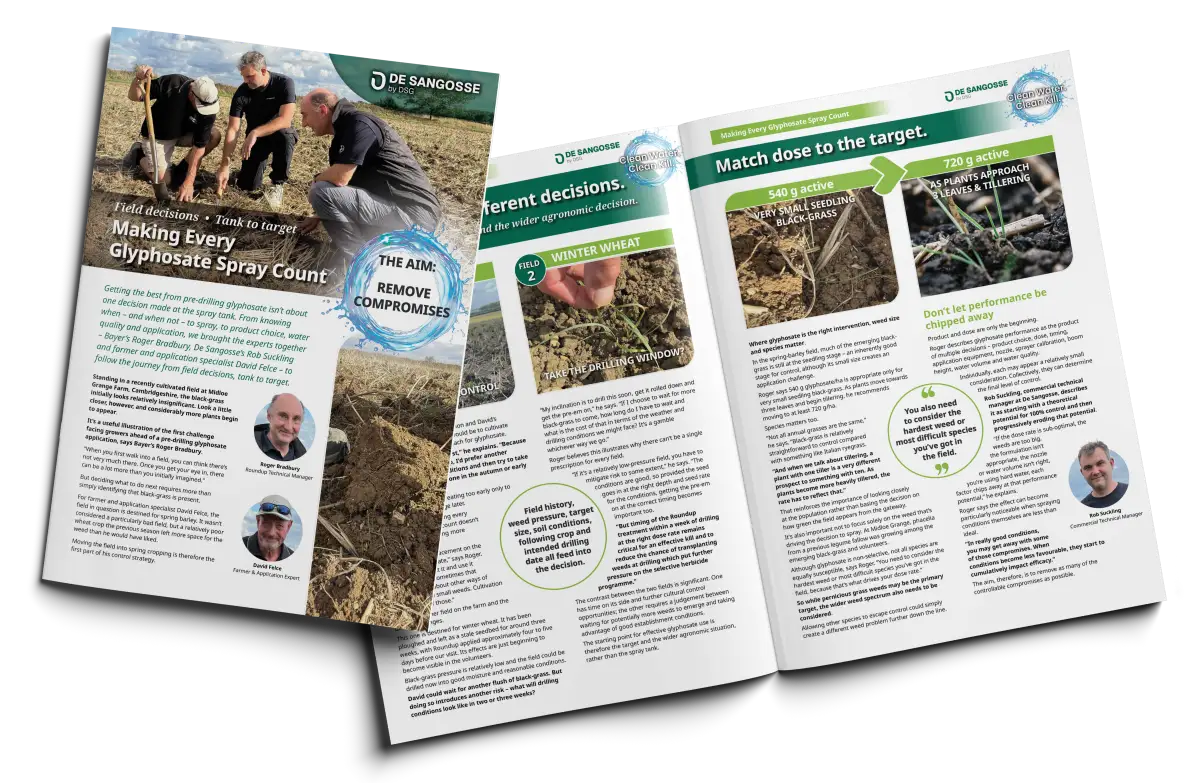
Getting the best from pre-drilling glyphosate isn’t about one decision made at the spray tank. From knowing when – and when not – to spray, to product choice, water quality and application, every decision can influence the final result.
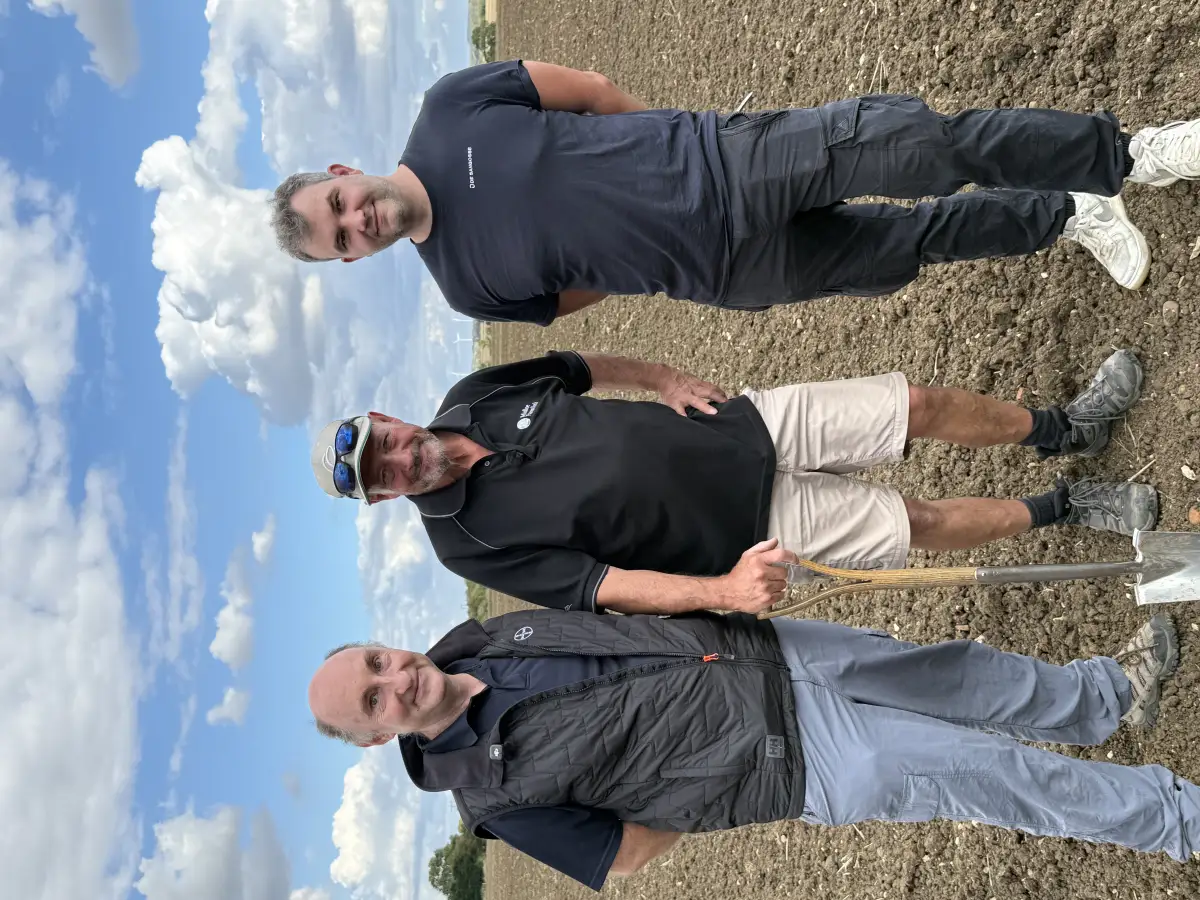
A field visit to Midloe Grange Farm in Cambridgeshire brought together Bayer’s Roger Bradbury, De Sangosse Commercial Technical Manager Rob Suckling and farmer and application specialist David Felce to follow the journey from field decision, tank to target.
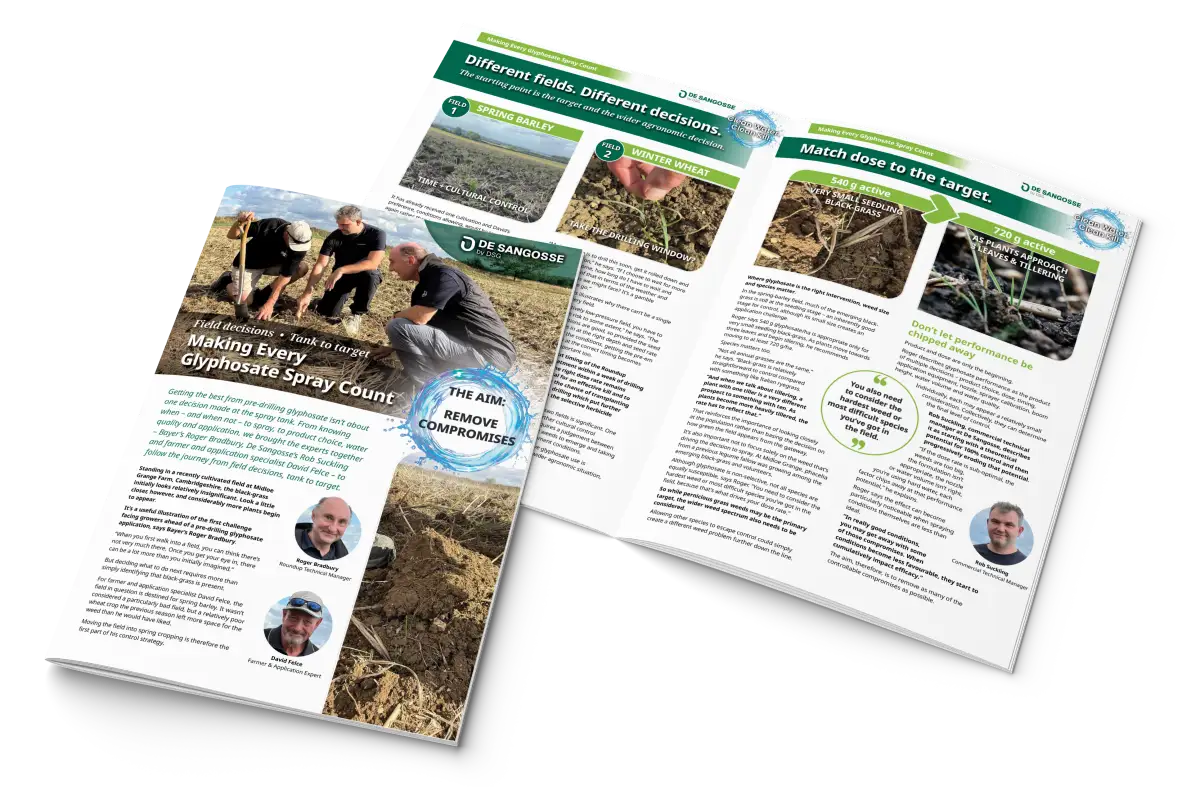
Join Roger, Rob and David in the field as they work through the practical decisions that can help give every pre-drilling glyphosate application the best possible chance of delivering robust control.
Good glyphosate stewardship starts before the sprayer enters the field.
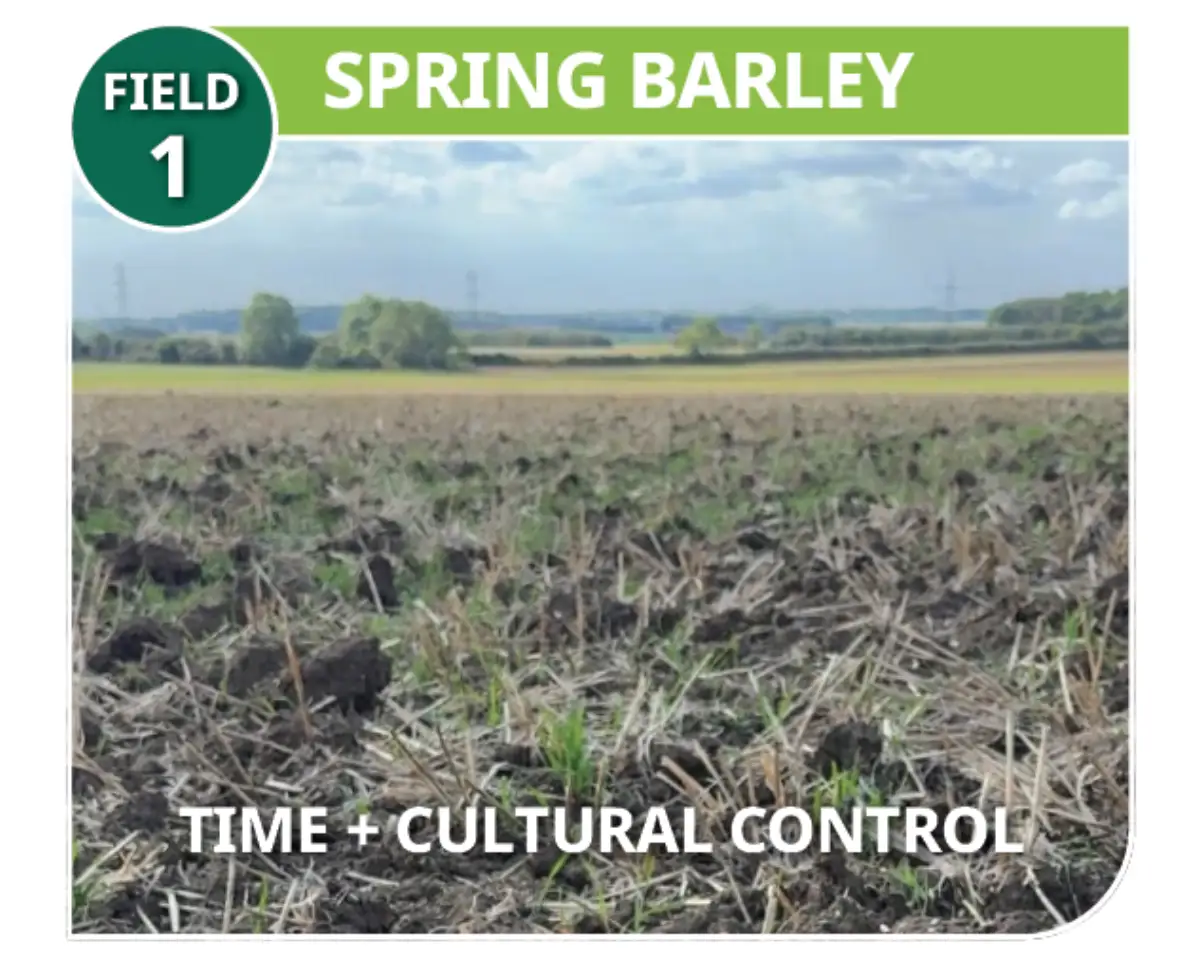
At Midloe Grange, two fields demonstrated why there can’t be a single prescription for every situation.
One, destined for spring barley, had already received one cultivation. With time before drilling, David’s preference was to cultivate again and use another cultural-control opportunity rather than automatically reaching for glyphosate.
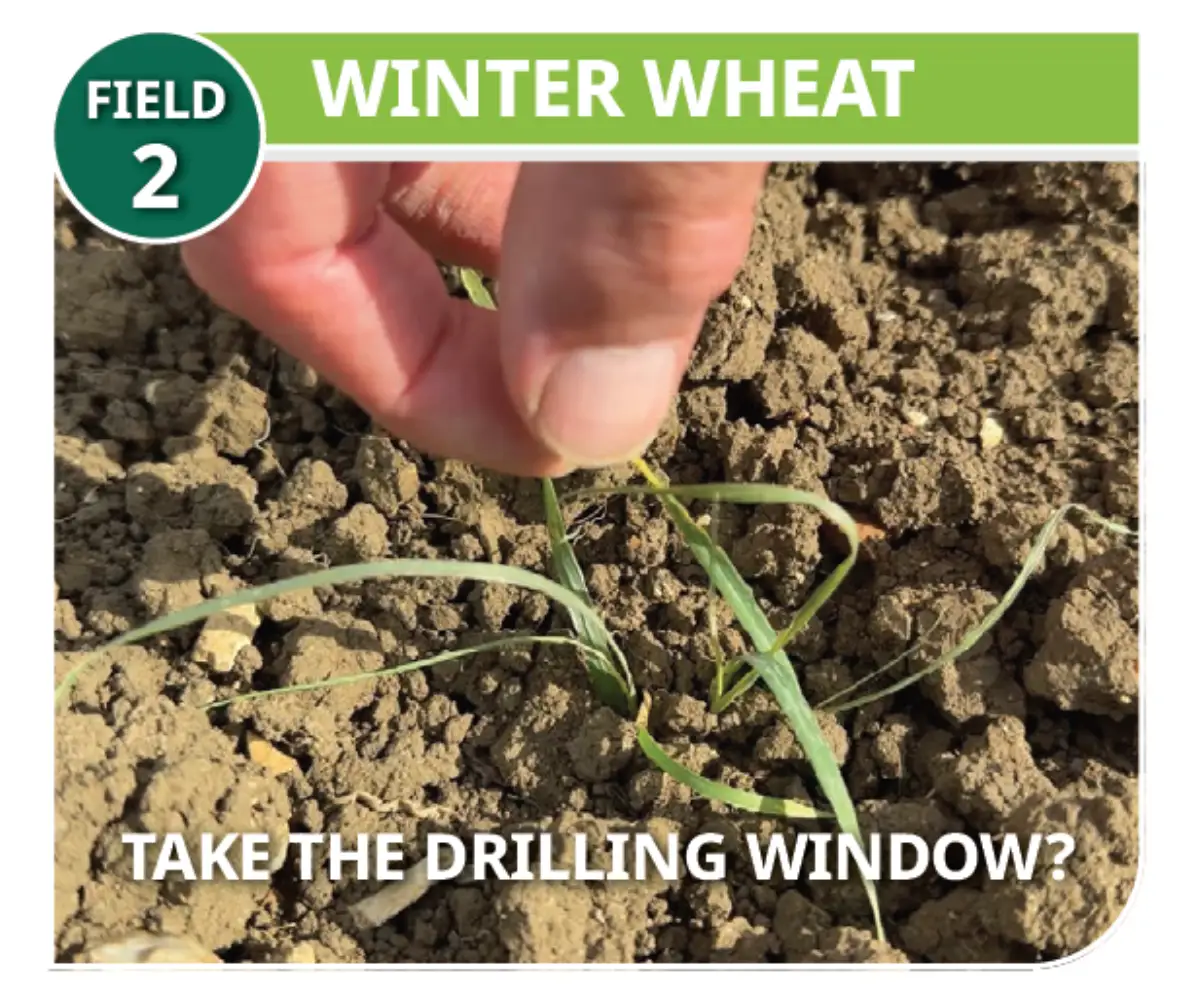
The second field, destined for winter wheat, had been left as a stale seedbed for around three weeks and treated with Roundup four to five days before the visit. With good moisture and drilling conditions, the decision was different: wait for another flush of black-grass, or take the opportunity to establish the crop?
Field history. Weed pressure. Target size. Soil conditions. Following crop. Drilling date.
They all influence whether glyphosate is the right intervention – and when.
Once glyphosate is the right intervention, weed species, size and growth stage matter.
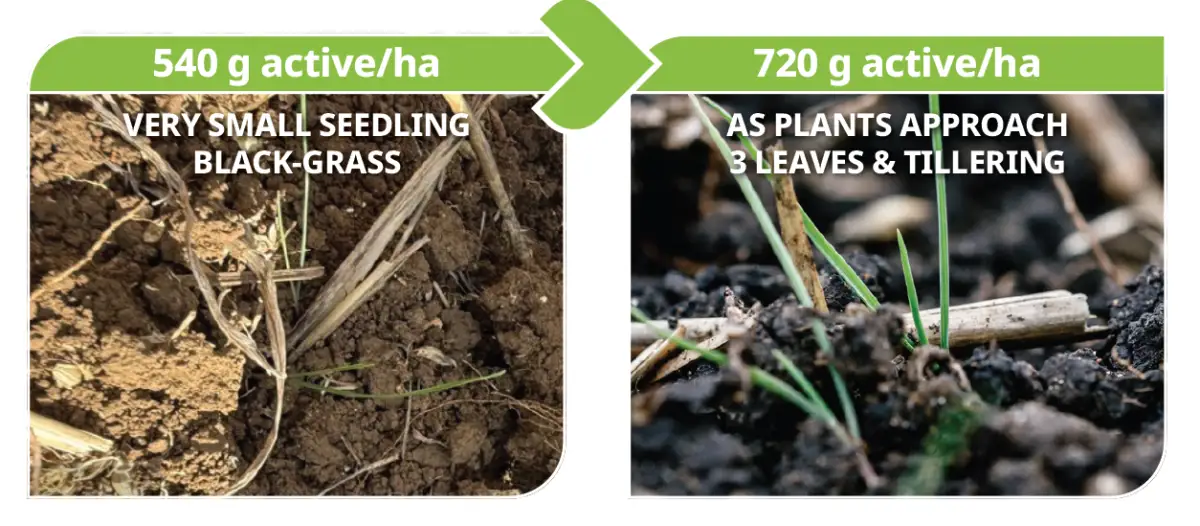
At Midloe Grange, much of the emerging black-grass was still at the seedling stage. According to Roger Bradbury, Roundup Technical Manager:
Very small seedling black-grass
As plants move towards three leaves and begin tillering:
Increase dose to reflect the more developed target
But growth stage isn't the only consideration.
Black-grass is relatively straightforward to control compared with species such as Italian ryegrass, and a plant with one tiller presents a very different challenge to one with ten.
The whole weed spectrum should also be considered. Phacelia from a previous legume fallow mix was present at Midloe Grange alongside black-grass and volunteers.
“You need to consider the hardest weed or most difficult species you've got in the field, because that's what drives your dose rate.”
Roger Bradbury, Bayer
In other words, don't judge the required treatment simply by how green the field looks from the gateway. Get out, identify the species present and assess their growth stage.
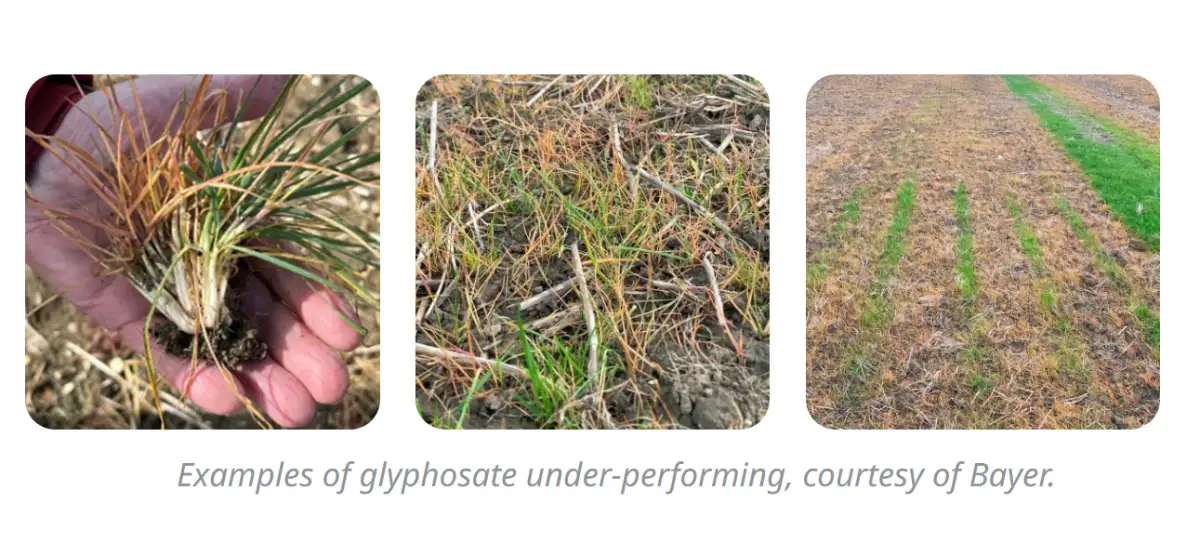
The theoretical potential for good control can be progressively eroded by a series of seemingly small compromises.
Product choice → Dose → Timing → Water quality → Water volume → Nozzle → Pressure → Boom height → Forward speed
As Rob Suckling explains:
“If the dose rate is sub-optimal, the weeds are too big, the formulation isn’t appropriate, the nozzle or water volume isn’t right, each factor chips away at that performance potential.”
Good conditions may mask some of those compromises. As conditions become less favourable, their cumulative impact on efficacy becomes more significant.
The objective is therefore to remove as many controllable compromises as possible.
If the dose rate is sub-optimal, the weeds are too big, the formulation isn’t appropriate, the nozzle or water volume isn’t right, each factor chips away at that performance potential.
Rob Suckling
Commercial Technical Manager, De Sangosse
Water quality is one of those potentially hidden compromises.
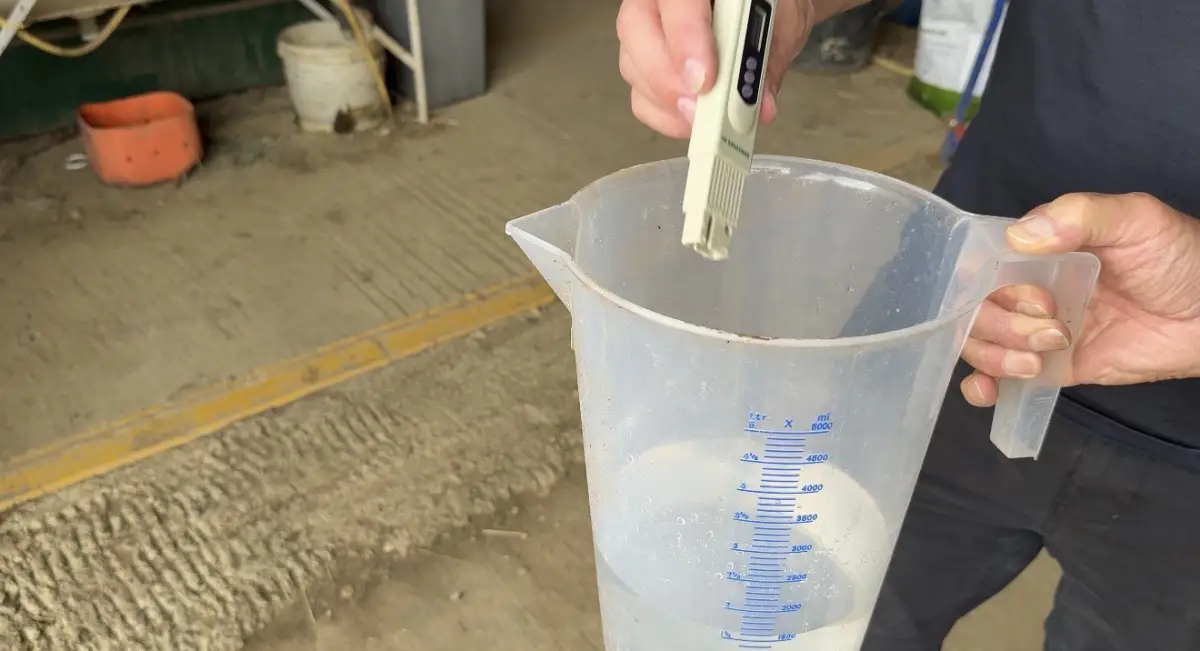
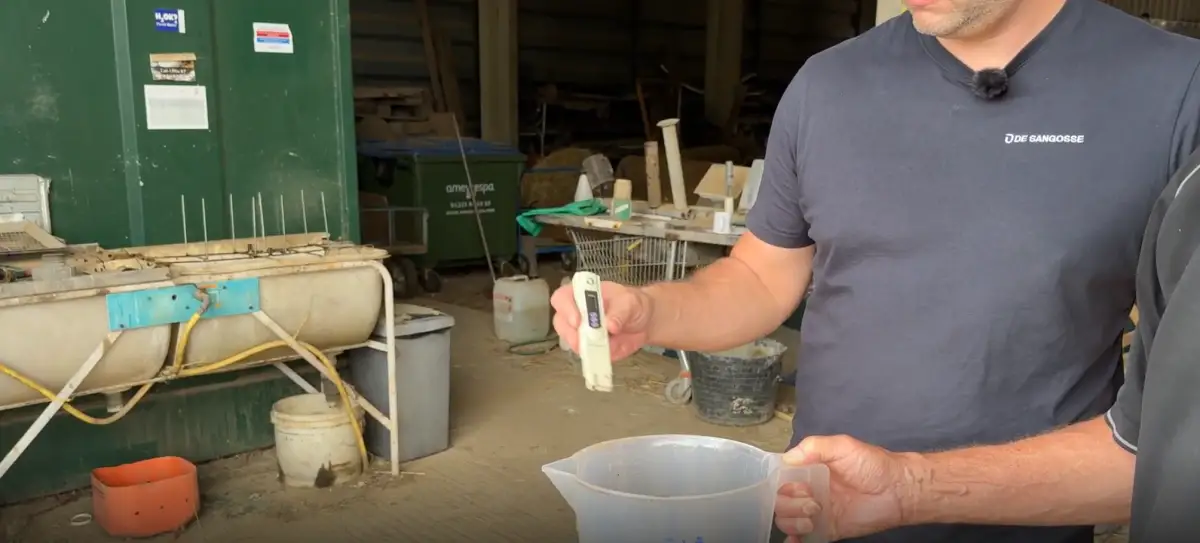
David uses mains water at Midloe Grange, stored in a plastic tank. Previous testing indicated around 350ppm. During filming, Rob tested a fresh sample with a digital TDS meter:
338 ppm - For clean mains water, the reading provided a useful indication that this was a hard water source.
Hard water contains dissolved positively charged ions that can interact with glyphosate. But the potential impact isn't determined by hardness alone.
Water hardness + formulation + glyphosate dose + water volume all influence the overall risk.
Bayer's Roundup formulations are designed to provide greater consistency in hard-water situations. There can nevertheless be circumstances where conditioning has a role, particularly as hardness becomes more extreme or where lower glyphosate doses are combined with higher water volumes.
Moving from:
100 L/ha → 200 L/ha
means introducing twice the quantity of hard-water ions that can potentially interact with the same dose of herbicide.
That's why water volume can't be considered separately from water hardness, formulation and glyphosate dose.
Where conditioning is required, condition the water first with a true water conditioner (such as X-Change), before glyphosate enters the tank.
→ Download: X-Change Tech Sheet
The need to understand the source becomes even more important with borehole water.
Rob says the softest borehole samples he tends to encounter are around 500–600ppm, while water at 1000ppm or more is commonly reported.
At particularly high levels, conditioning may be required even where a formulation has greater inherent robustness to hard water.
Don't assume. Test the water you're actually using.
Water hardness and pH aren't the same thing.
Glyphosate itself is an effective buffering agent and will naturally move the spray solution towards an acidic pH once added.
Simply acidifying the spray water should therefore not be treated as a substitute for understanding hardness.
Where hard-water antagonism is identified, the objective is to deal with the ions responsible for that interaction rather than simply chasing a lower pH.
Getting the tank chemistry right still only gets the application part of the way there.
For the one-to-two-leaf black-grass observed during the Midloe Grange field walk, David favours:
where conditions and the product label permit
With a small, upright target, the challenge is getting spray droplets to intercept and remain on a very limited leaf area.
That means boom height, forward speed, nozzle size, pressure and droplet characteristics all have to work together.
Boom height above the target
Where weeds are very small, the target is effectively ground level.
Where the seedbed is rough
David says 10km/hr is good, with 12km/hr potentially appropriate on a smooth seedbed. Where conditions are rough, reducing speed to around 8–10km/hr can improve boom stability and reduce turbulence.
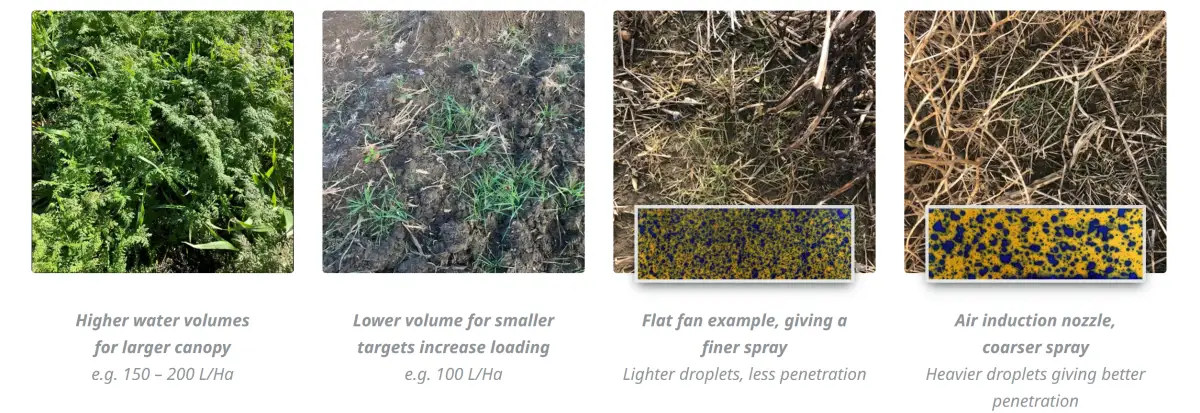
Nozzle selection should then reflect the target and conditions. A fine-to-medium spray may offer greater opportunity to intercept small, exposed grassweeds, while a larger target or canopy can accommodate larger droplets and greater drift reduction.
As target size and complexity increase, water volume may also need to increase.
There is therefore no universally “best” nozzle or water volume.
Target → speed → pressure → water volume → nozzle size → nozzle type.
Build the application around what you're trying to hit.
Finally, go back and look at what happened.
The confirmation of glyphosate resistance in UK Italian ryegrass populations makes avoiding unnecessary survivors increasingly important.
Sub-optimal dose, poor application or inappropriate timing don't “create” resistance in an individual weed. But they can increase the likelihood that naturally less-sensitive individuals survive. If those survivors aren't controlled by another method and subsequently set seed, they present a resistance risk.
Unexpected survivors should be investigated, not accepted.
Glyphosate should also form part of an integrated approach alongside cultural controls and effective selective chemistry rather than carrying the entire weed-control burden
1. What's the target?
Species, growth stage, population, field history – and is another flush likely?
2. Is glyphosate the right intervention now?
Could cultivation, drilling strategy or another cultural control be the better next step?
3. Are product and dose appropriate?
Match formulation and dose to the species, weed size and conditions.
4. Do you know your water?
Know the source, understand its hardness and consider the water volume you're using.
5. Can you deliver it effectively?
Match nozzle, droplet, pressure, boom height, speed and water volume to the target – then return to the field and check the result.
Make every glyphosate spray count.
Visit our Glyphosate Stewardship Hub for practical guidance on water quality, application and protecting herbicide performance.