Pod-Stik Takes to the Skies in OSR

Drone application shows promise for protecting yield at a critical stage

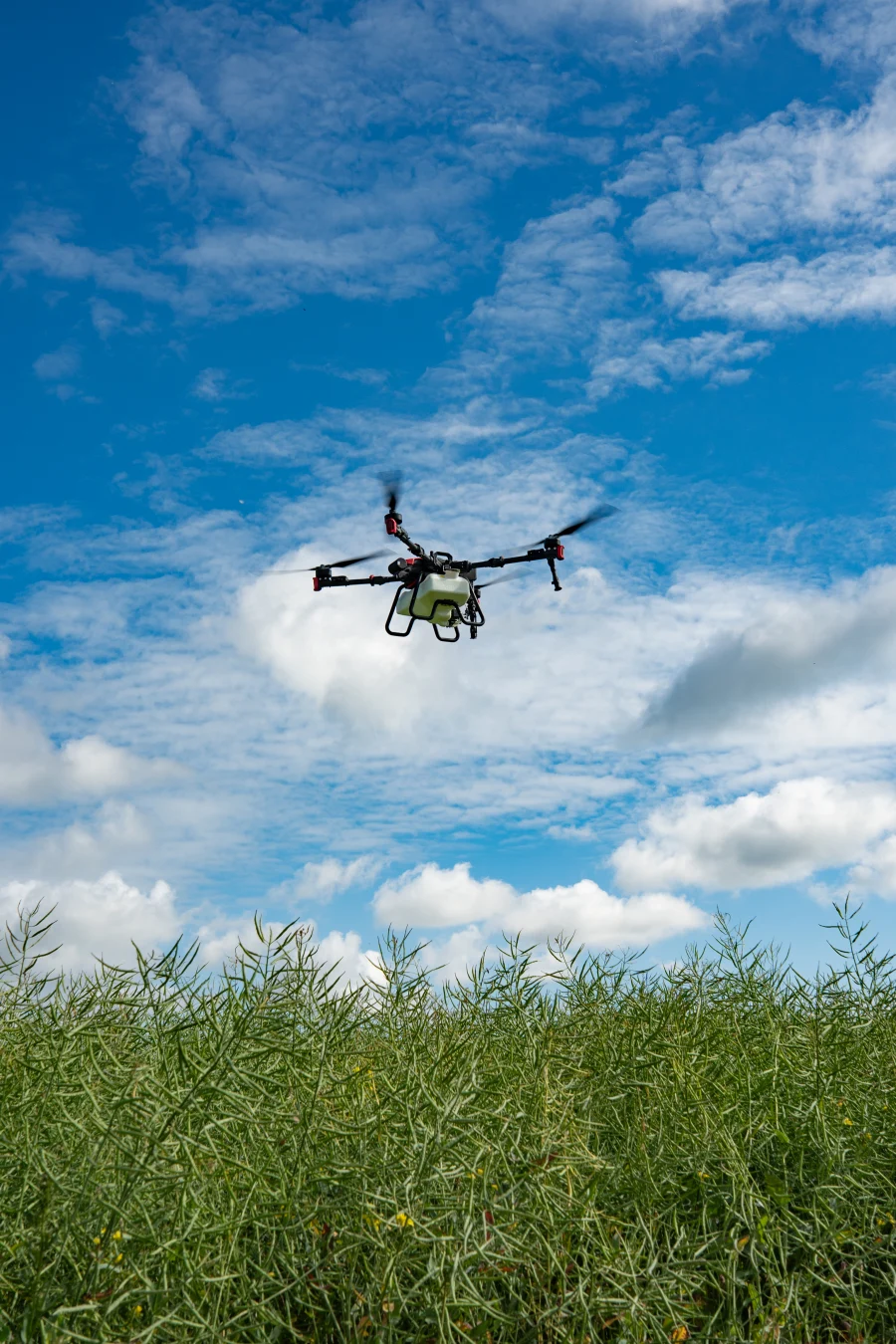
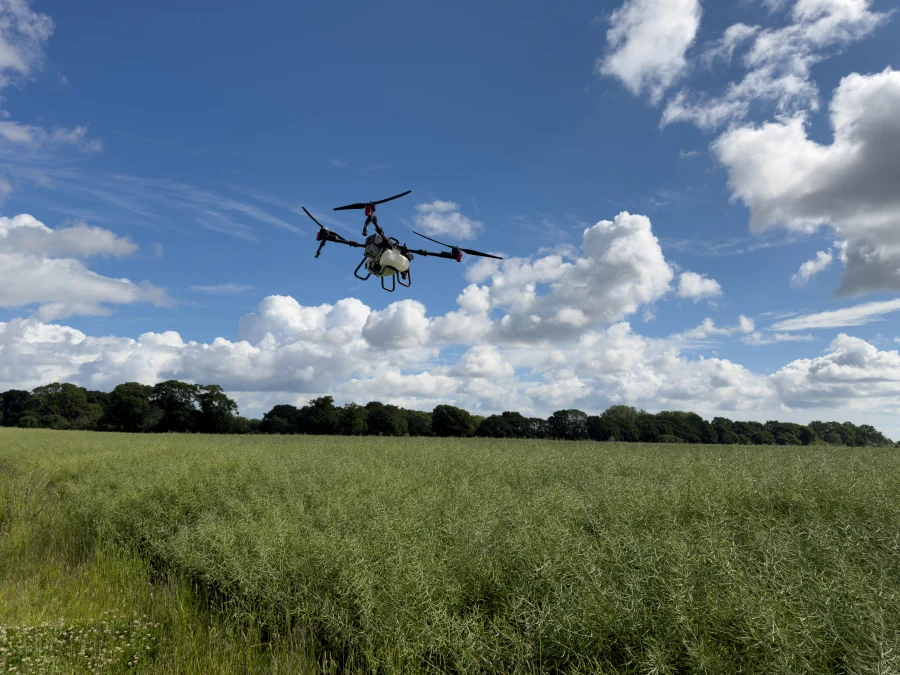
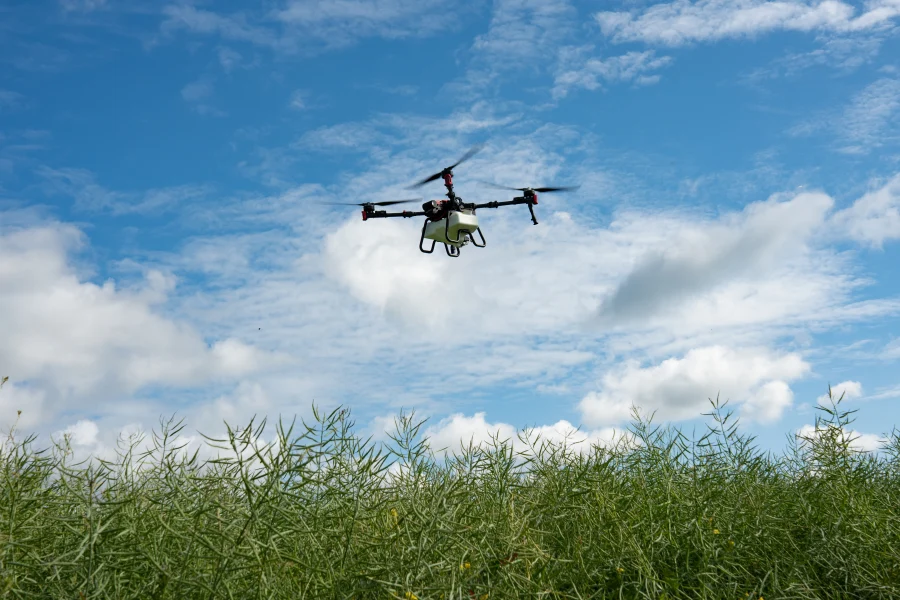
Drone applying Pod-Stik over an oilseed rape crop

Pod-Stik Takes to the Skies in Oilseed Rape

Drone application shows promise for protecting yield at a critical stage

As oilseed rape crops move rapidly towards maturity and spray windows tighten, new approaches to application are helping growers tackle one of the crop's greatest challenges - keeping yield in the combine.

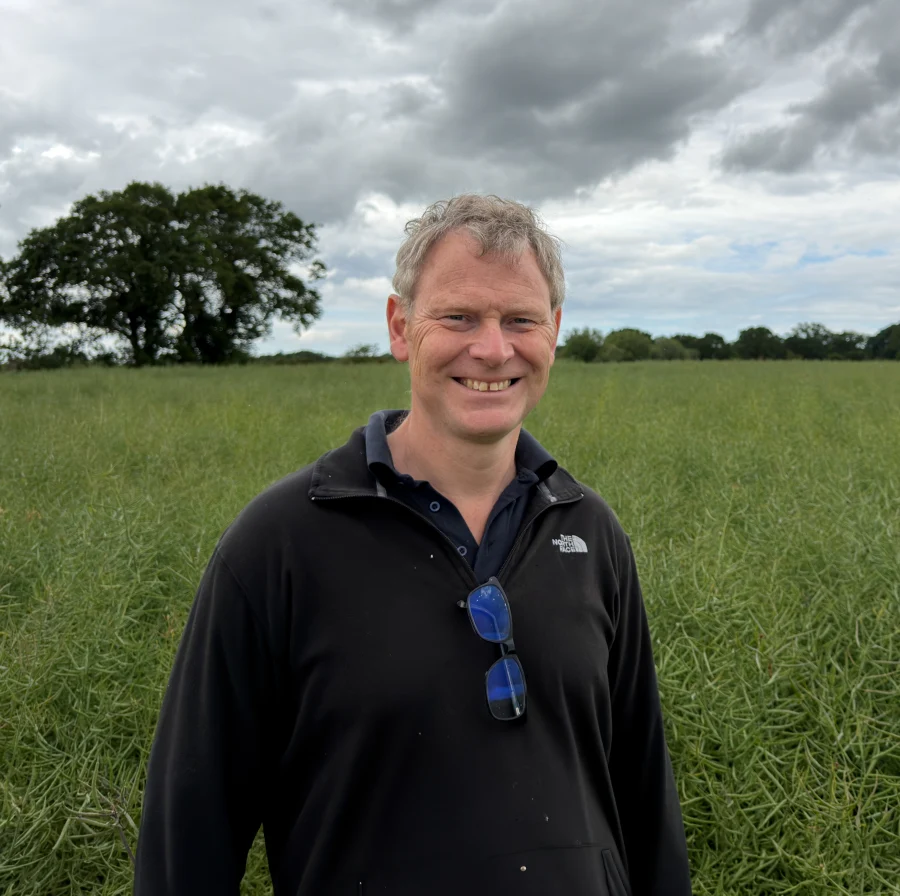
For Norfolk grower Joe Mitchell, that opportunity came after winning a Pod-Stik drone application in a De Sangosse competition at LAMMA. Applied to what he describes as his best oilseed rape crop for many years, the treatment provided a valuable opportunity to see how drone technology performs in a real farm situation.

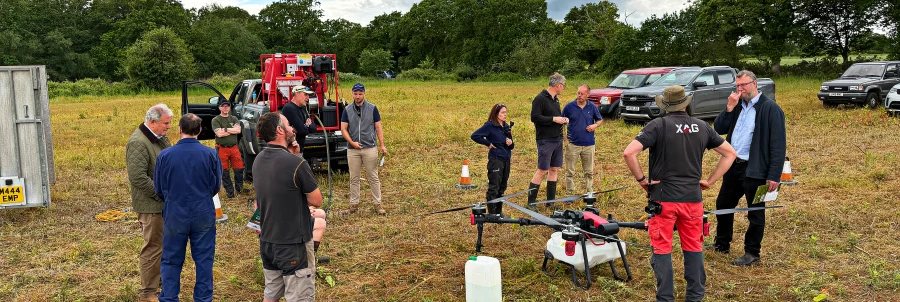
Delivered in collaboration with AutoSpray Systems and Rural Drone Services, the application took place on 5 June at High House Farm near Great Yarmouth, where neighbouring growers gathered to observe the operation and assess its potential in a commercial farming system.
Watch the application in action


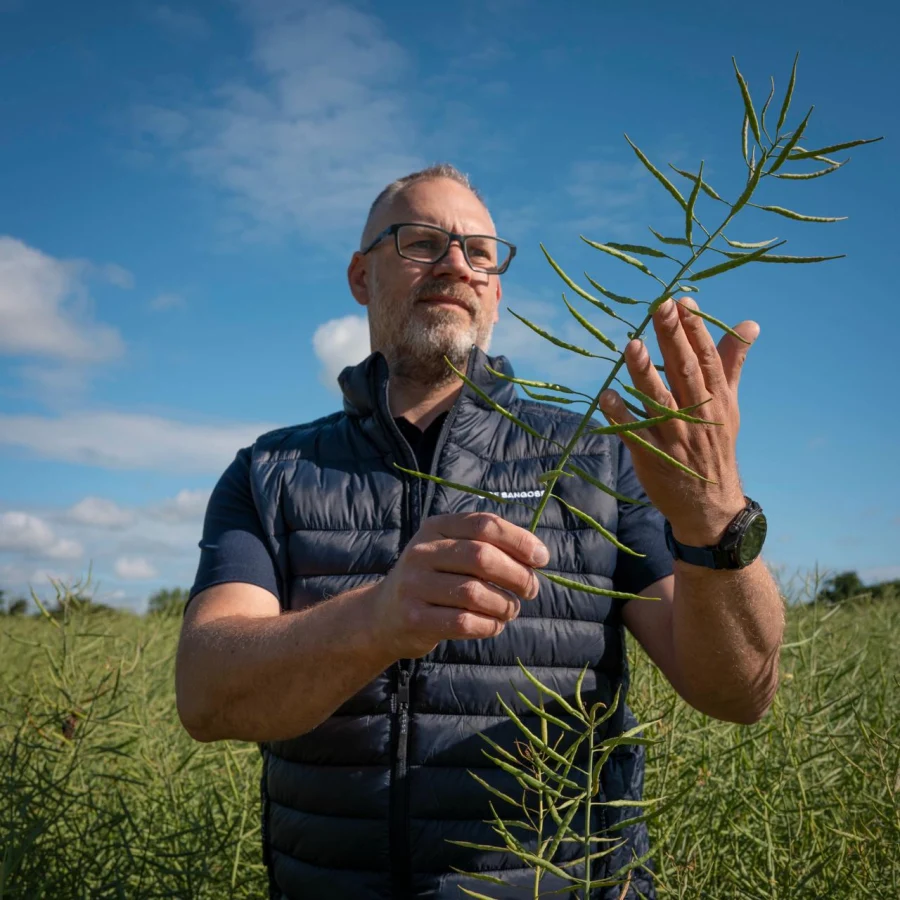
Oilseed rape pods being examined in the field after drone application

Building a crop worth protecting

Joe farms 225ha across a mixed enterprise comprising a 32,000 free-range laying poultry unit, beef cattle, sheep and 150ha of arable cropping. Oilseed rape occupies around 13ha within a wide rotation.

Having grown OSR for the past decade, Joe places strong emphasis on establishing the crop correctly from day one. “Establishment is everything. If you don't get the plant numbers right, you won't get the yield.”

This season's LG Academic crop was drilled into favourable conditions, with poultry manure incorporated ahead of establishment to support soil condition and crop vigour. The result is a crop Joe describes as the strongest he has grown for many years.

“It's probably the best oilseed rape we've had for a long time. It's thick, it's even and it's podded all the way through.”

But as every OSR grower knows, a good crop is only valuable if it makes it through to harvest. “By this stage, a lot of the yield is already there. Now it's about protecting what you've built.”

“Establishment is everything. If you don't get the plant numbers right, you won't get the yield. It's probably the best oilseed rape we've had for a long time. It's thick, it's even and it's podded all the way through. By this stage, a lot of the yield is already there. Now it's about protecting what you've built.”
Oilseed rape pods being examined by Stuart in the field

Why Pod-Stik?

According to Stuart Sutherland, Technical Business Manager at De Sangosse, pod shatter remains one of the biggest causes of pre-harvest yield loss in oilseed rape. Environmental stresses such as wetting and drying cycles, wind and crop movement all place pressure on the pod seam, increasing the risk of pods opening before harvest.

Pod-Stik works by forming a flexible polymer film across the pod surface, reinforcing the pod seam (dehiscence zone) - the point where pods naturally split.

“By strengthening that weak point, you reduce the likelihood of the pod opening under stress.”

Independent trial work has shown that Pod-Stik delivers an average yield response of 0.31 t/ha in oilseed rape (n=134 trials), equivalent to approximately £120/ha at an OSR price of £450/t. Typical pod shatter losses range from 10-25%, rising significantly in adverse conditions or where harvest is delayed.

“These figures are about protecting yield rather than increasing it. It's about reducing the losses that occur at the end of the season and protecting volunteers in the next crop.”

For Joe, Pod-Stik has become a standard part of his OSR programme.

“I've always used it. It was one of the key inputs recommended to me by neighbouring farmers and our agronomist.”

Getting the timing right

Timing is critical to maximising the benefit of a pod sealant.

In oilseed rape, the optimum timing for Pod-Stik is BBCH 80–82, when pods are fully formed, green and bendy. Applying at this stage protects yield before the main stress period begins.

Historically, Joe often applied Pod-Stik alongside glyphosate, but his thinking has evolved.

“I used to apply it with glyphosate, but I now think that's too late. If you want to protect what you've grown, you need to be ahead of that timing in an ideal world.”

The importance of timely protection may become even greater in future.

“With the uncertainty around the future of pre-harvest glyphosate and how crops are managed before harvest, there's a chance they'll be standing longer. That means more exposure to weather and greater risk.”

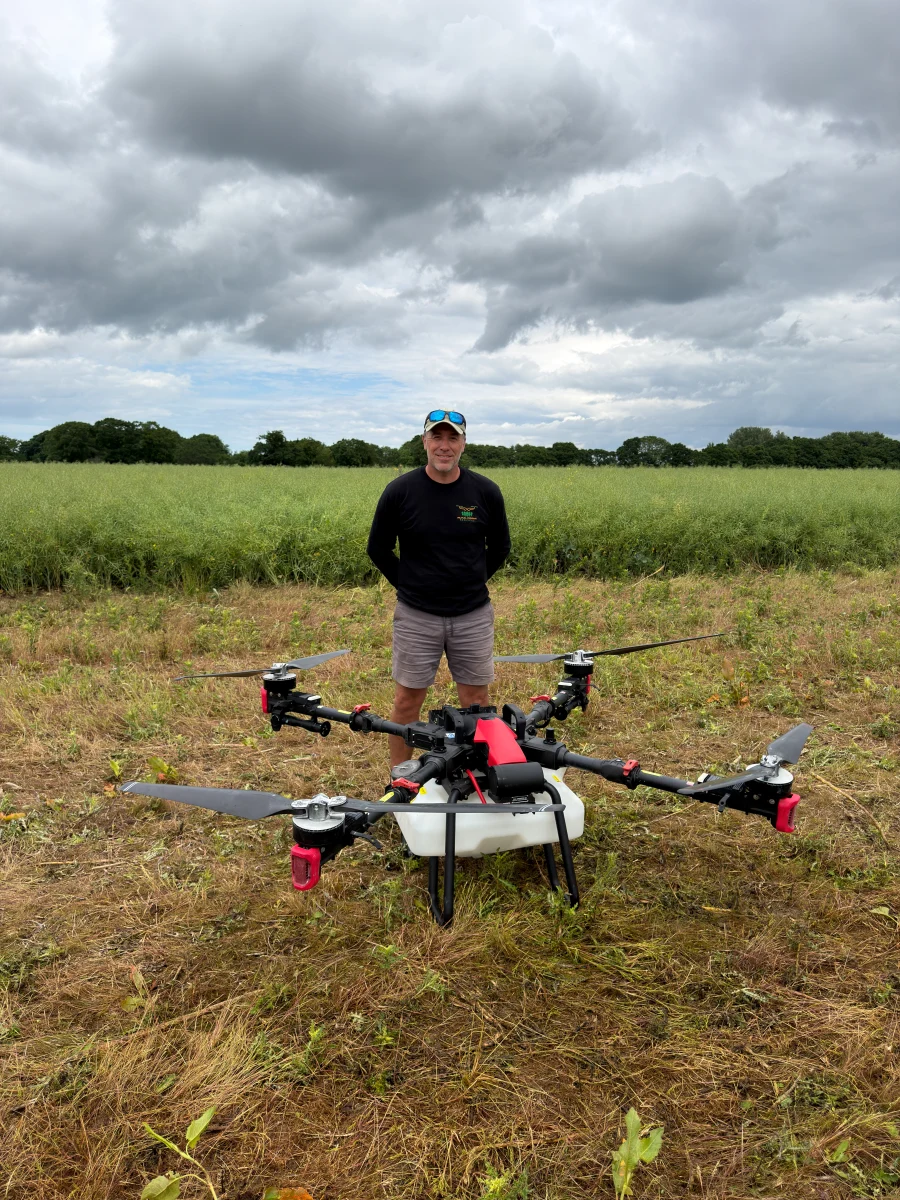
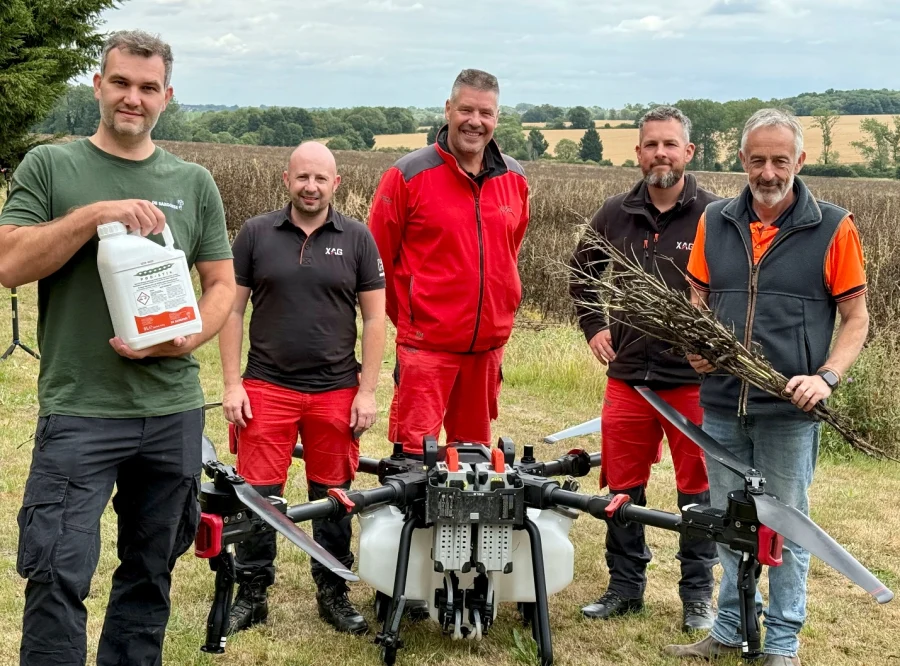
Pod-Sealant drone operator with drone ready for application Drone and operator in the field Growers gathered for the drone application

Why apply by drone?

Late-season applications can present practical challenges, particularly in high-biomass crops.

Joe discovered this first-hand last season.

“The crop last year was over five foot tall, and we ended up dragging the boom through it and damaging the sprayer. That's the last thing you want to be doing when pods are vulnerable.”

Drone application removes the need to drive through the crop altogether.

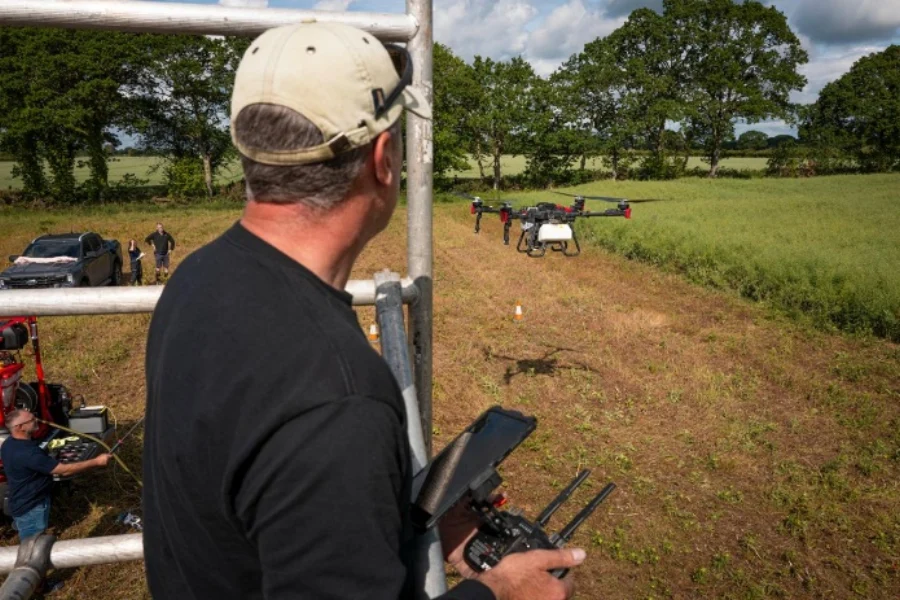
The application at High House Farm was carried out by Rural Drone Services, part of the AutoSpray Systems Pilot Network of CAA-certified drone pilots. Using RTK-guided mapping, the 8.3ha field was treated in approximately one hour, applying 1.0 L/ha Pod-Stik in 50 L/ha water at a flight height of 3m and a forward speed of 11m/sec.

Operator Matt Kemp explains

“You're using rotor downwash to carry droplets into the canopy.”

Several growers present noted how effectively the spray appeared to move into the crop canopy, particularly compared with a traditional boom sprayer.

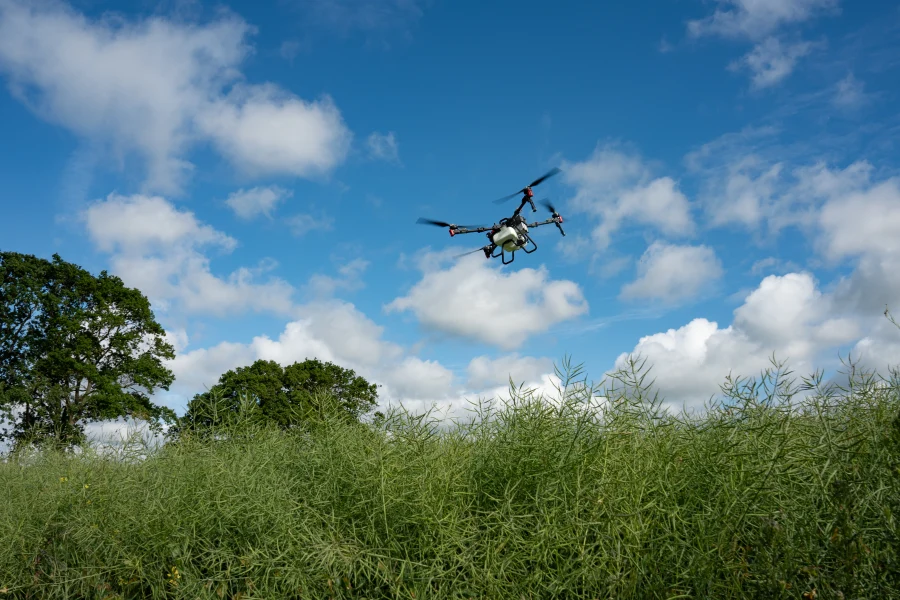
Drone applying Pod-Stik above the crop

Current regulatory position

Plant protection products (PPPs) are not currently approved for application via drone under UK regulation. However, products such as pod sealants, nutritionals and biostimulants can be applied. Glyphosate is therefore not approved for drone application, meaning Pod-Stik treatments delivered by drone are applied as standalone applications.

Building practical experience

The application forms part of a growing body of practical knowledge around drone-applied pod sealants under UK conditions.

AutoSpray Systems has played a key role in developing the legal, technical and operational frameworks that support drone spraying in UK agriculture, while De Sangosse continues to evaluate where drone delivery of its products can add value within commercial farming systems.

“Moving from trials into real farm use is key. It's about developing approaches growers and agronomists can use with confidence and adds value beyond typical application methods.”

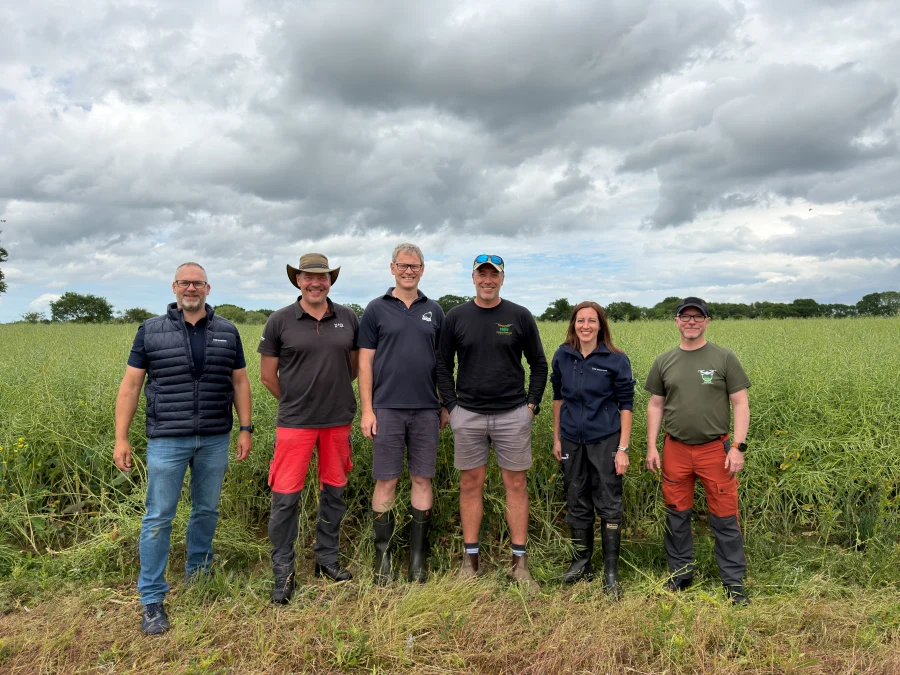
Group photograph in the oilseed rape field
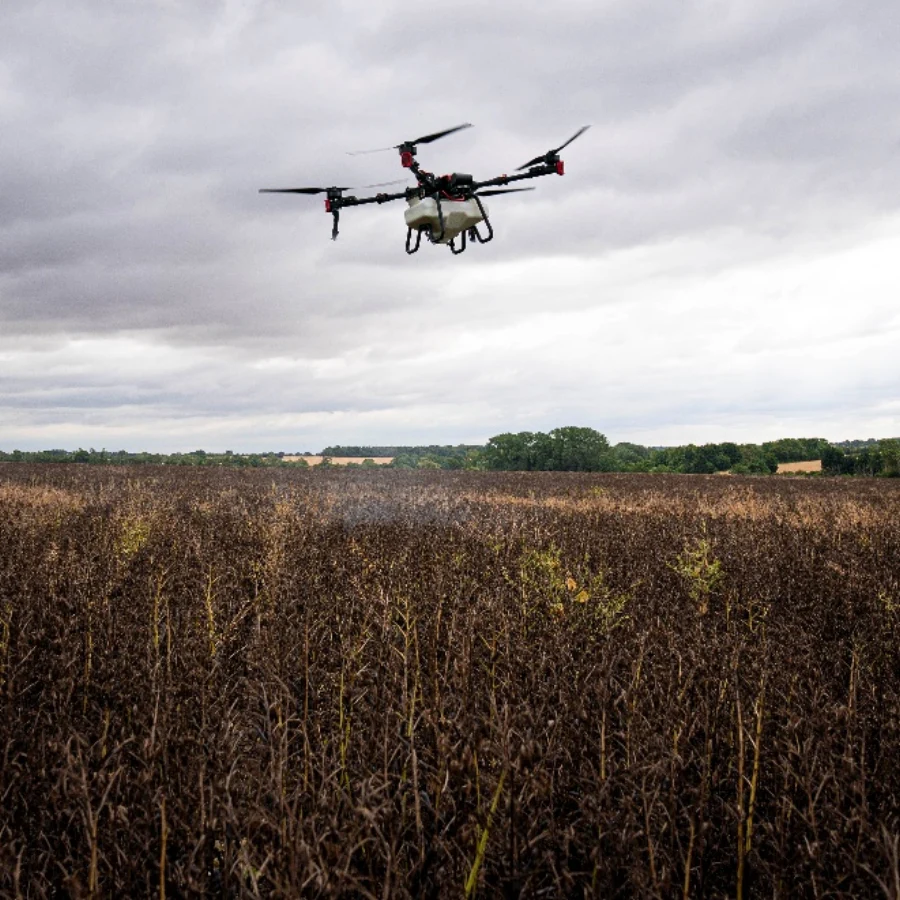
Drone application over a crop

UK First Drone Application of Pod-Stik in Field Beans

Read the article →

Looking beyond oilseed rape

While oilseed rape is the most established use for pod sealants, Stuart believes the wider opportunity may lie in other podded crops, particularly field beans.

"Pod shatter in beans is often underestimated," he says. "As crops approach harvest, pods can become extremely brittle, particularly in hot, dry conditions. Once losses occur, there's no way of recovering that yield."

Unlike oilseed rape, bean crops mature progressively from the bottom of the canopy upwards, meaning the earliest pods can be exposed to weathering and shatter risk while the remainder of the crop continues to develop.

"You're effectively trying to protect a crop that isn't maturing uniformly," explains Stuart. "The lower pods are exposed for the longest period and are often where losses begin."

With growing interest in beans as a break crop, protecting yield through to harvest is becoming increasingly important.

"The principle is exactly the same as oilseed rape," he adds. "You've invested in establishing and growing the crop, so it makes sense to protect that yield potential until it reaches the trailer."

For growers interested in how Pod-Stik is being evaluated in beans, further information can be found in our article:

Read the article →
Drone above oilseed rape Team in the oilseed rape field, after successful application of pod sealant by drone to oil seed rape crop Drone application over oilseed rape canopy

A practical step forward

For Joe, drone application isn't a replacement for conventional spraying, but another tool in the toolbox.

“It's very easy to fall in love with the technology, but you have to ask - is it actually the right solution?”

His verdict after the application is cautiously optimistic.

“If it helps you get the timing right and protect the crop without damage, then it's worth considering.”

And ultimately, the objective remains the same, regardless of how the product is applied:

“If you can protect the crop at the right moment, that's what makes the difference.”

Interested in Pod-Stik?

Whether you're planning your next oilseed rape crop or looking to protect high-value bean crops ahead of harvest, the De Sangosse technical team can help.

support@desangosse.co.uk

For information about drone application services, visit the AutoSpray Pilot Network via AutoSpray Systems.