Field A
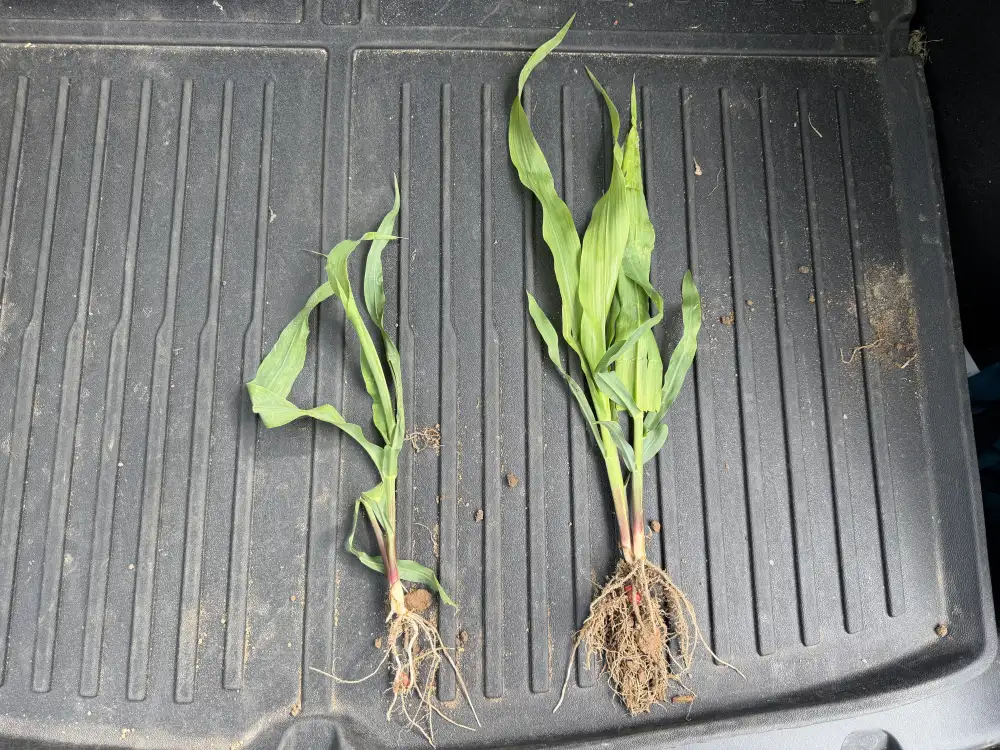
Left: Untreated
Right: Treated
Right: Treated
Poor response despite phosphate applications.
Limitation: Availability and access
Stewardship priority: Protect and Place
You've reviewed the evidence.
You've identified what may be limiting phosphorus uptake.
Now it’s time to decide which stewardship approach – if any – is most appropriate.
Successful phosphate stewardship isn’t about applying more phosphorus.
It’s about matching the right strategy to the right limitation.
| If your diagnosis points towards | Stewardship response |
|---|---|
| Insufficient phosphorus supply | Manage P supply in line with crop requirement and soil status |
| Restricted root access | PLACE |
| Poor phosphorus availability | PROTECT |
| Under-utilised soil reserves | UNLOCK |
| Multiple limitations | Combine approaches according to the evidence |
| No P limitation identified | Continue to monitor |
Start Here
Not every field requires the same approach.
Some fields have a single limitation.
Others may require a combination of stewardship strategies.
Remember – More than one limitation can exist within the same field.
Where the evidence points to multiple constraints, a combination of stewardship approaches may be appropriate.

Phosphorus does not remain freely available indefinitely. Following application, it begins reacting with calcium, iron and aluminium within the soil, reducing the amount immediately available for crop uptake.
The stewardship objective is to maintain phosphorus availability during the period of greatest crop demand.

Phosphorus moves very little through the soil.
Roots must physically intercept phosphorus before uptake can occur.
The stewardship objective is to place phosphorus access within the developing root zone.

Many UK soils already contain substantial phosphorus reserves.
The opportunity is helping crops make better use of phosphorus
that already exists within the soil.
The stewardship objective is to make better use of existing soil reserves before relying on additional phosphorus inputs.
Every field is different.
Successful phosphate stewardship starts by understanding what is limiting crop uptake, then selecting the stewardship approach that best addresses the evidence.
Depending on the diagnosis, that may mean Protect, Place, Unlock, a combination of approaches – or no intervention.

Discover technologies designed to support phosphorus availability, nutrient access and utilisation of existing soil reserves.
Two fields. Three different stewardship priorities.
Poor response despite phosphate applications.
Limitation: Availability and access
Stewardship priority: Protect and Place
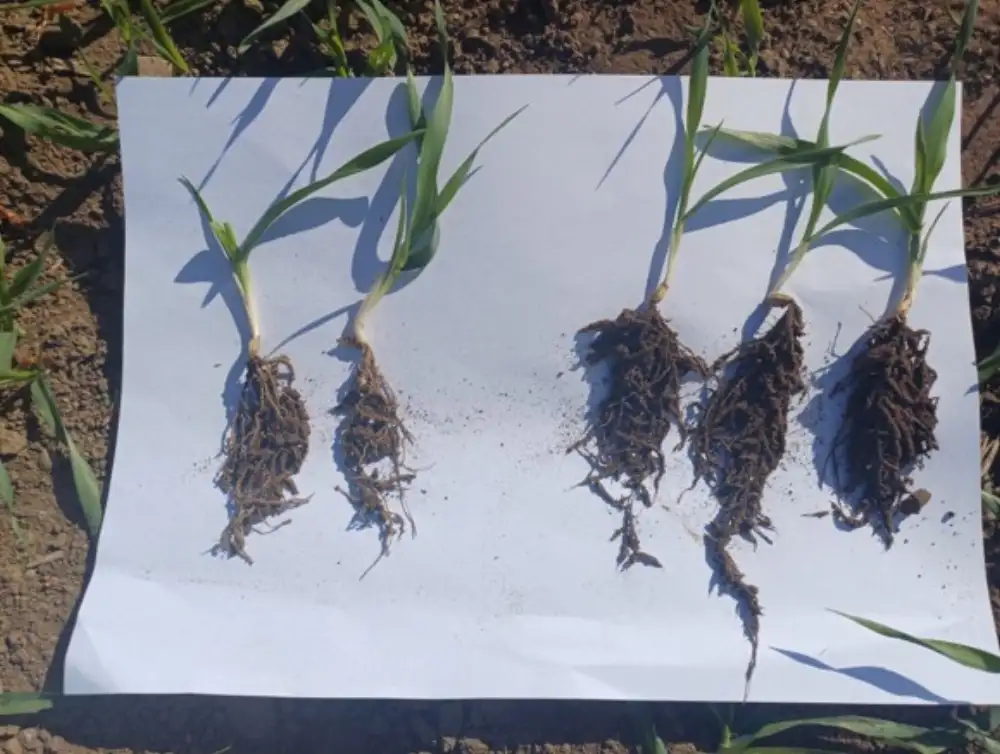
P Index 3 soil but disappointing crop performance and low grain P results.
Limitation: Soil reserves
Stewardship priority: Unlock
The symptoms may appear similar. The solution often isn’t.
Phosphate Clinic
Protect • Place • Unlock
Join Dr Christina Baxter of ADAS and Rob Suckling of De Sangosse as they explore when to Protect, when to Place, when to Unlock – and when a combination may be appropriate.
Watch Episode 4: Protect. Place. Unlock.
In this episode
Phosphate Stewardship
Improving phosphorus efficiency isn’t only about crop performance.
Discover how better phosphorus utilisation can also help reduce nutrient loss, protect water quality and support more sustainable nutrient management.
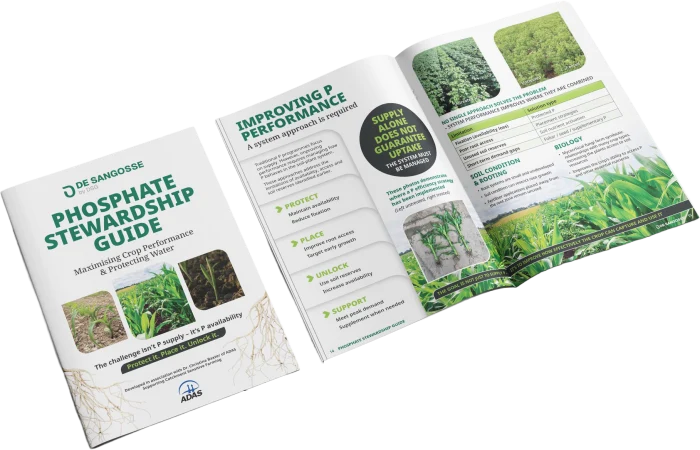
Explore the science behind phosphorus uptake, availability and stewardship.
Download The Guide