English rivers fail to achieve good ecological status, with elevated phosphorus recognised as one of the contributing pressures.
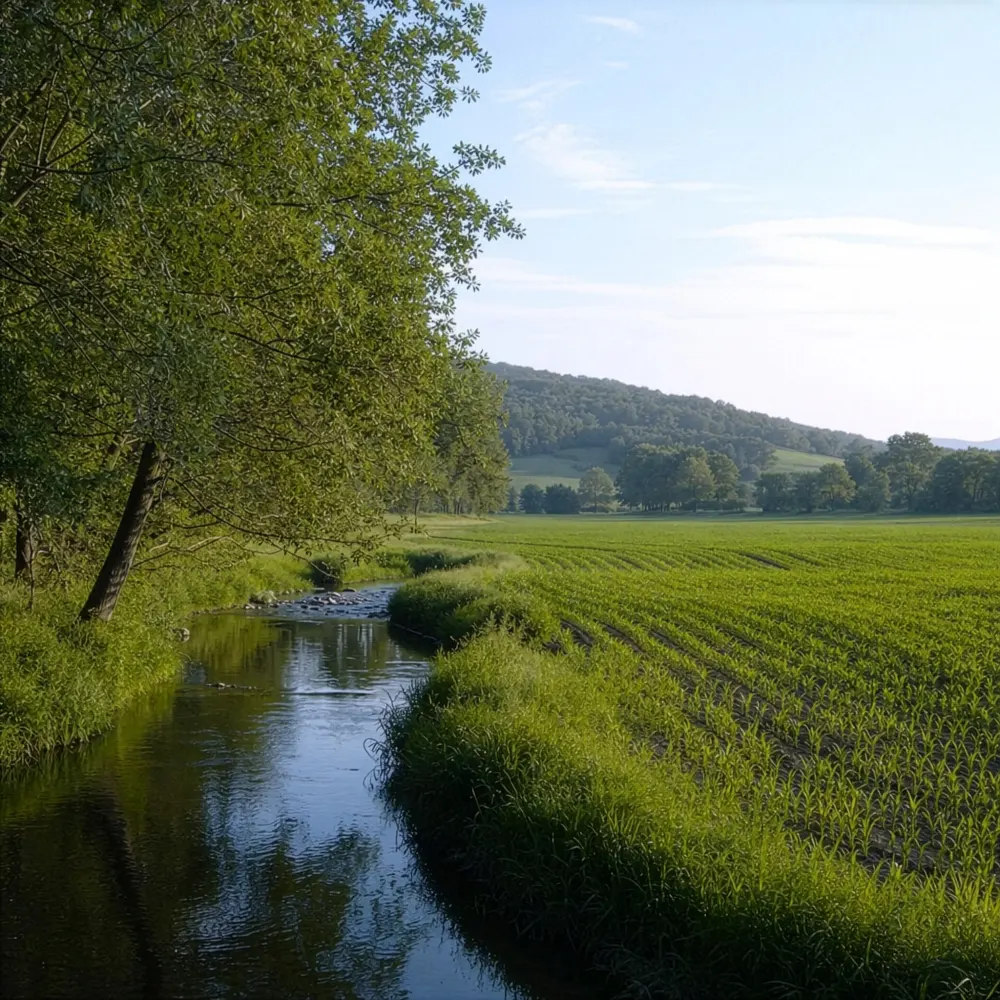
Phosphorus is essential for productive crops.
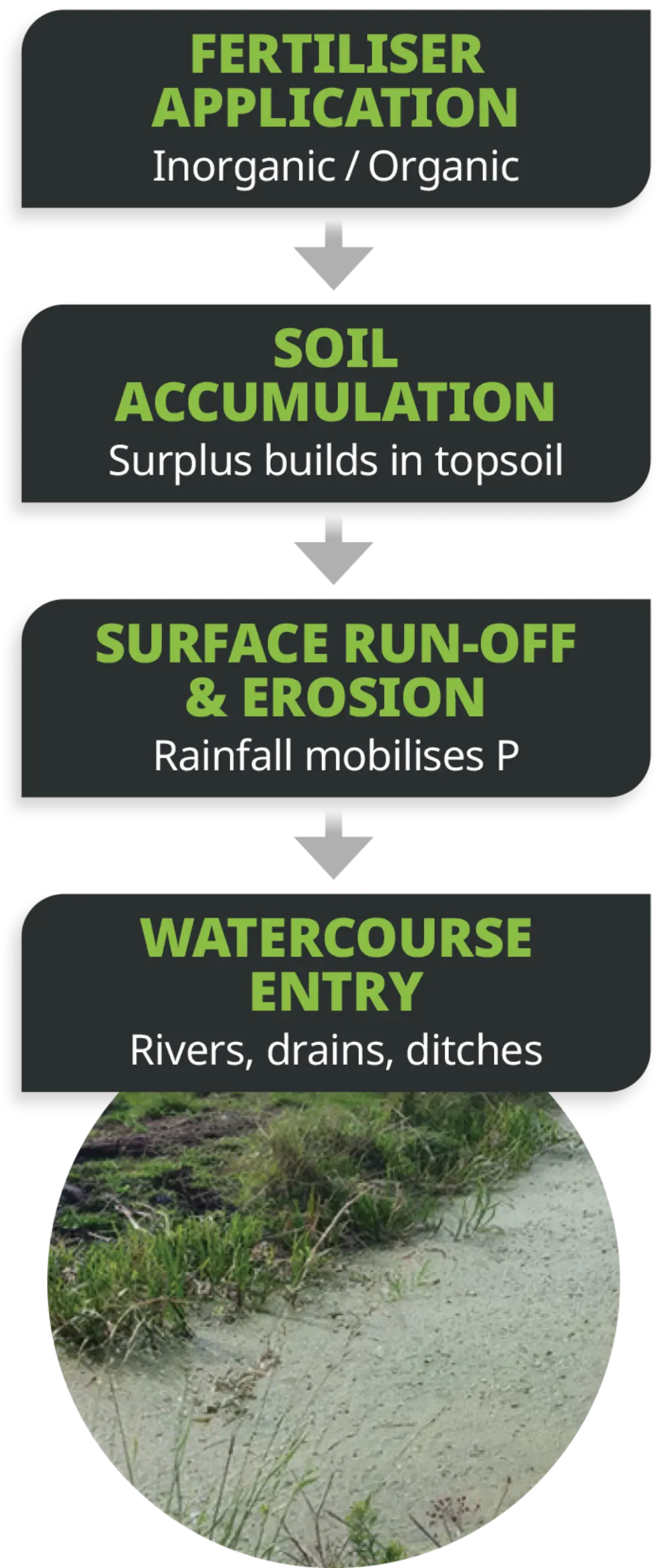
However, phosphorus that is not captured by the crop does not simply disappear. It remains within the farming system where it can build up in the soil or be lost through surface run-off, erosion and drainage pathways.
Good phosphate stewardship is about helping crops capture more phosphorus, improving nutrient use efficiency and reducing the risk of phosphorus loss to the wider environment.
Good stewardship delivers two important outcomes.
Better Crop Performance
Better Water Quality
Why Water Quality Matters
Essential in the Field. Problematic in Water.
Within crops, phosphorus supports:
- Root development
- Energy transfer
- Biomass production
- Yield formation
When phosphorus enters rivers, streams and lakes it can contribute to:
- Excessive algal growth
- Reduced oxygen levels
- Death of aquatic life
- Poor water quality
- Damage to aquatic ecosystems
This process is known as eutrophication.
Estimated proportion of phosphorus entering watercourses originating from agriculture.
How Phosphorus Can Be Lost?
Not all applied or soil phosphorus is captured by the crop.
Unused phosphorus may:
- Remain in the soil, building reserves over time.
- Move through surface run-off, particularly during heavy rainfall.
- Travel with eroded soil particles.
- Move through drainage pathways into watercourses.
Improving phosphorus capture reduces the opportunity for these losses to occur.
Stewardship Starts with Efficiency
Better Uptake. Better Outcomes.
Improving phosphorus efficiency benefits both crop productivity and environmental performance.
When more phosphorus is captured by the crop:
- Nutrient use efficiency improves
- Existing soil reserves are utilised more effectively
- Return on fertiliser investment increases
- Less phosphorus remains vulnerable to loss
Stewardship begins by improving crop uptake – not simply changing applications rates.
What Good Stewardship Looks Like
Successful stewardship means making informed decisions throughout the season.

MONITOR
Understand what is happening in every field.
- Review grain analysis
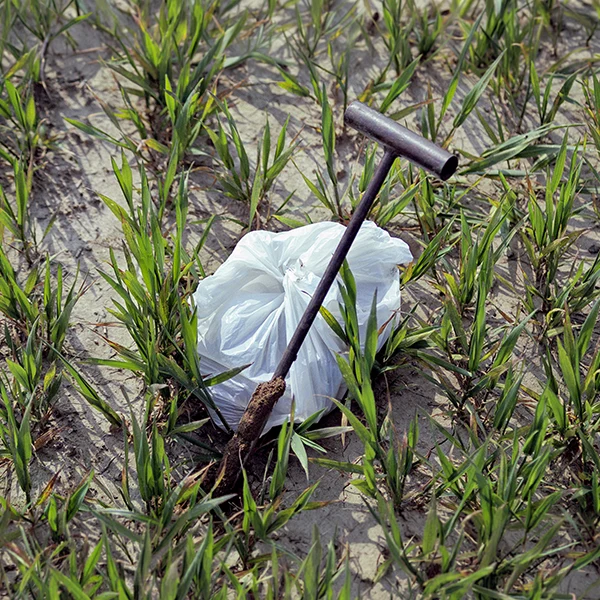
- Monitor soil phosphorus status
- Assess crop performance
- Track nutrient balances

TARGET
Match management to the limitation.
- Consider soil phosphorus status
- Match strategy to field conditions
- Avoid blanket approaches
- Build on the Protect. Place. Unlock framework

PLAN
Reduce opportunities for nutrient loss.
- Time applications appropriately
- Avoid high-risk conditions
- Reduce erosion risk
- Protect vulnerable areas
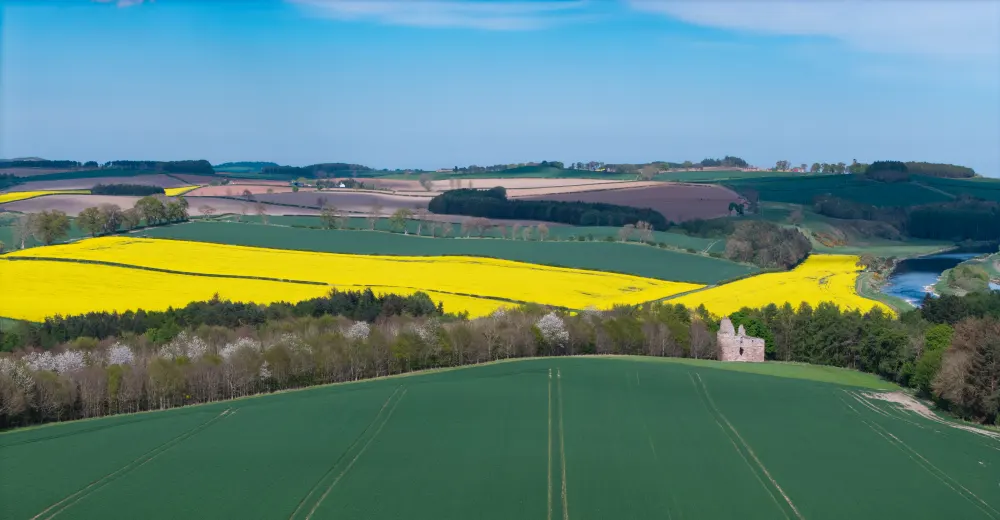
The Opportunity Of Legacy Phosphorus
Many UK soils contain significant phosphorus reserves built up over decades of fertiliser and manure applications.
Improving utilisation of these existing reserves can help:
- Increase phosphorus efficiency
- Reduce reliance on future phosphate inputs
- Improve crop performance
- Support better environmental outcomes
Making better use of phosphorus already within the farming system is a key principle of good stewardship.
Bringing The Journey Together
Your Phosphate Stewardship Journey
Throughout this hub we’ve explored how to improve phosphorus efficiency through a structured stewardship approach.
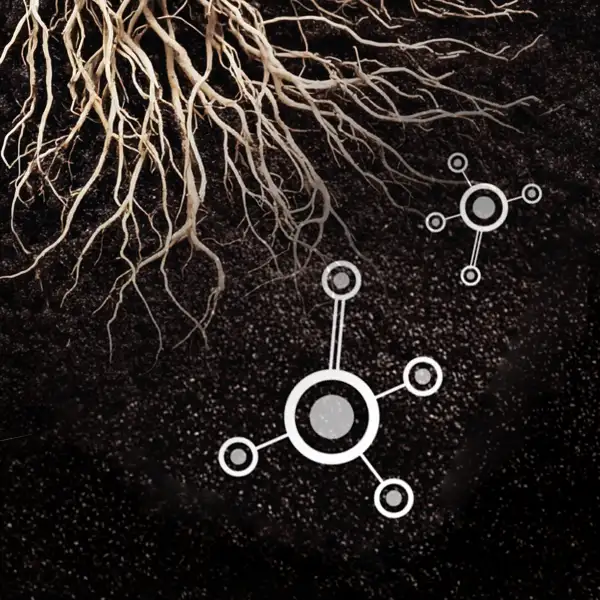
Better phosphorus capture
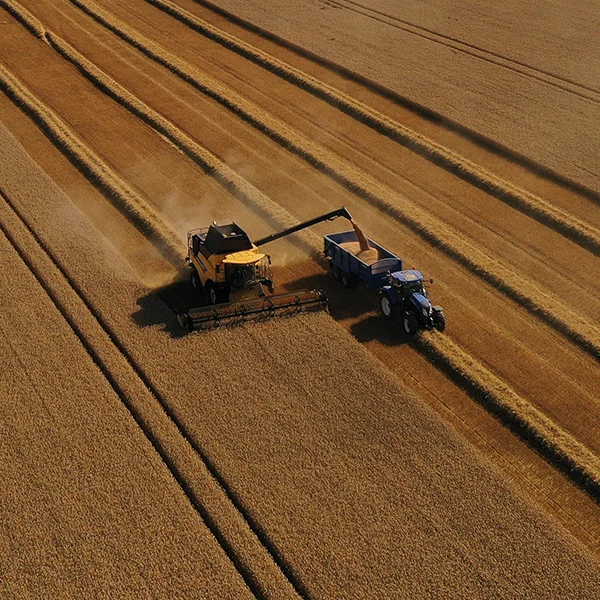
Better crop performance
Better water quality